WhatsApp Marketing 2026: Complete Strategy Guide

WhatsApp marketing in 2026 is the practice of using the WhatsApp Business API to reach, engage, and convert customers through personalized messaging, automated workflows, and in-chat commerce — on the platform used by 3.2 billion people worldwide.
The numbers speak for themselves. WhatsApp delivers 98% open rates, compared to 22% for email — and conversion rates that run 12x higher than traditional email campaigns. As messaging becomes the dominant channel for customer engagement, businesses that master WhatsApp marketing in 2026 are pulling ahead of competitors still relying on crowded inboxes and declining ad click-through rates.
This complete guide covers everything you need to know about WhatsApp marketing in 2026: the strategies that drive real revenue, how to stay compliant with Meta's evolving policies, the KPIs that matter, and how to get started with the right tools. Whether you're running a growth-stage startup or an enterprise operation, you'll find actionable insights here — backed by the latest platform data and ChatDaddy's experience managing 10 million+ daily messages for 23,500+ businesses across 50+ countries.
Table of Contents
1. Why WhatsApp Marketing Dominates in 2026
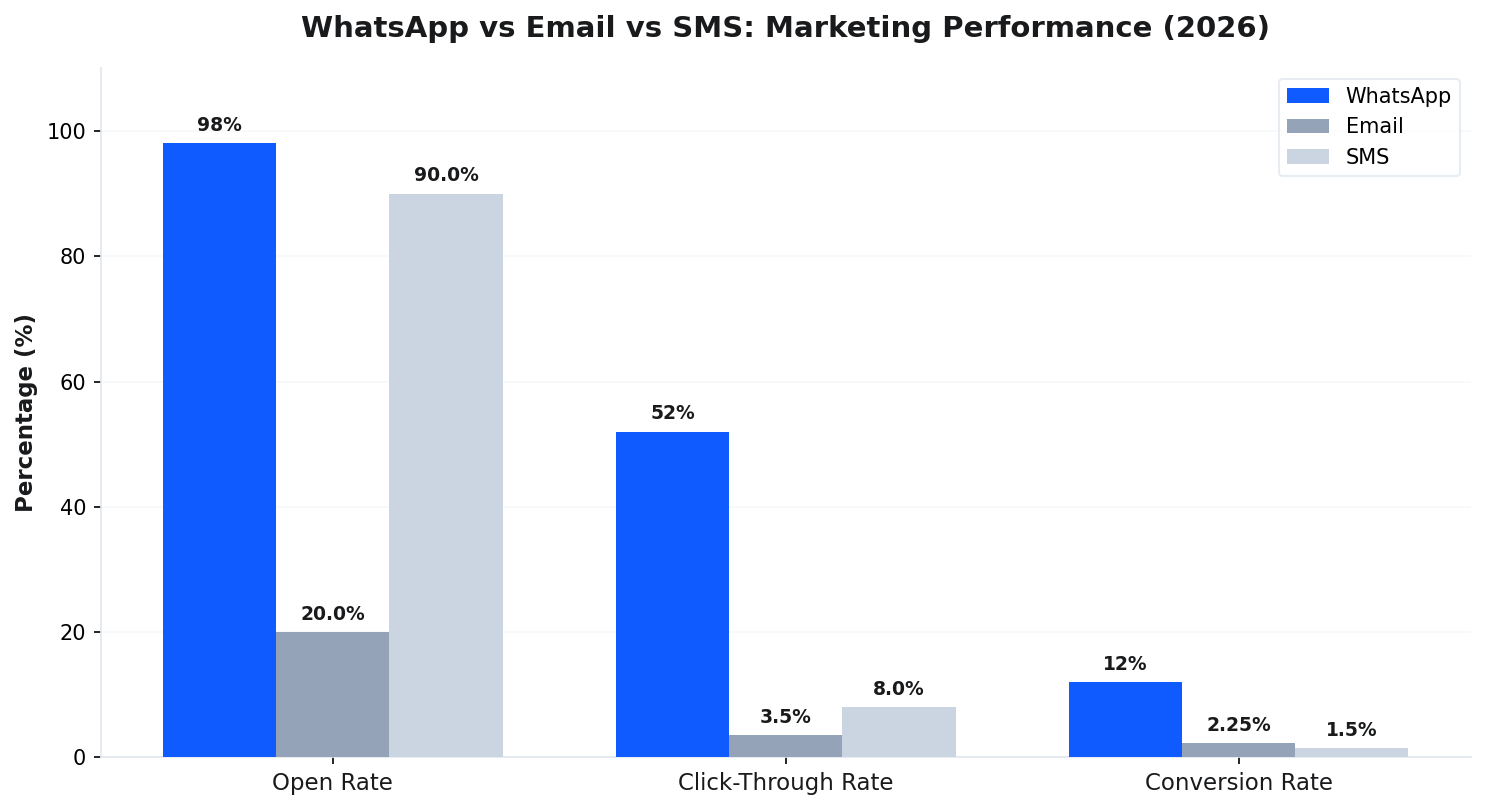
Figure 1: WhatsApp vs Email vs SMS marketing performance comparison — 2026
1.1 The Performance Gap Is Massive
The data paints a clear picture. WhatsApp does not just outperform other channels — it redefines what "good" looks like in business messaging.
| Metric | SMS | Push Notifications | ||
|---|---|---|---|---|
| Open Rate | 95-98% | 20-25% | 82-85% | 5-10% |
| Click-Through Rate | 45-60% | 2-5% | 10-15% | 2-4% |
| Conversion Rate | 8-15% | 1-3% | 2-5% | 1-2% |
| Response Time | < 3 min | 90 min+ | < 5 min | N/A |
| Cost per Conversion | $0.50-2.00 | $5-20 | $3-10 | $8-25 |
Table 1: Channel performance benchmarks — 2026
1.2 What Changed in 2025-2026
Four major shifts have supercharged WhatsApp marketing performance in the last 18 months:
- Per-message pricing model — Meta replaced the 24-hour conversation window with granular per-message pricing, making it cheaper to run targeted, high-frequency campaigns without overpaying for idle sessions.
- AI-optimized delivery — Meta's delivery algorithm now factors in user engagement signals (response time, reaction rates) to prioritise messages from high-quality senders, boosting open rates for compliant businesses.
- Quality-based scaling — Businesses maintaining Green quality ratings now unlock automatic messaging limit increases, rewarding customer-centric senders with exponential reach.
- In-chat commerce — Native product catalogs, payment flows, and order tracking have turned WhatsApp into a full end-to-end commerce channel, eliminating the friction of redirecting customers to external websites.
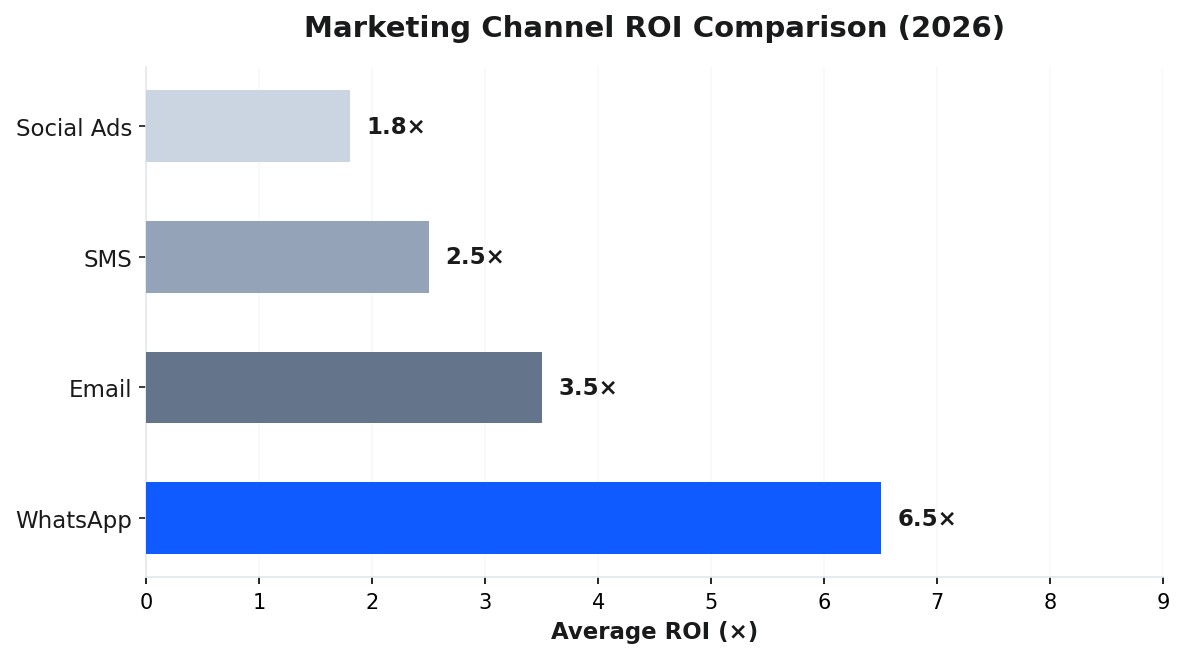
Figure 2: ROI comparison — WhatsApp vs Email vs SMS marketing, 2026
2. 7 WhatsApp Marketing Strategies That Drive Results
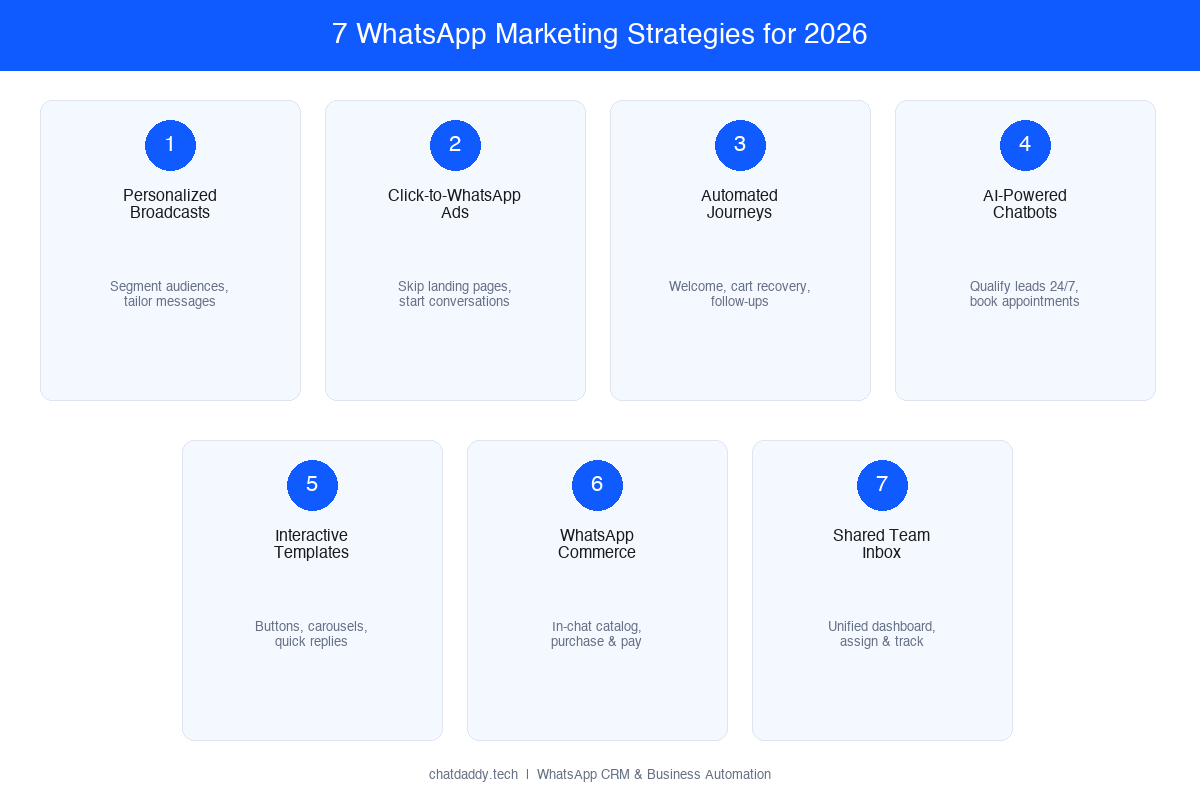
Figure 3: The 7 WhatsApp marketing strategies that drive results in 2026
Strategy 1: Personalized Broadcasts
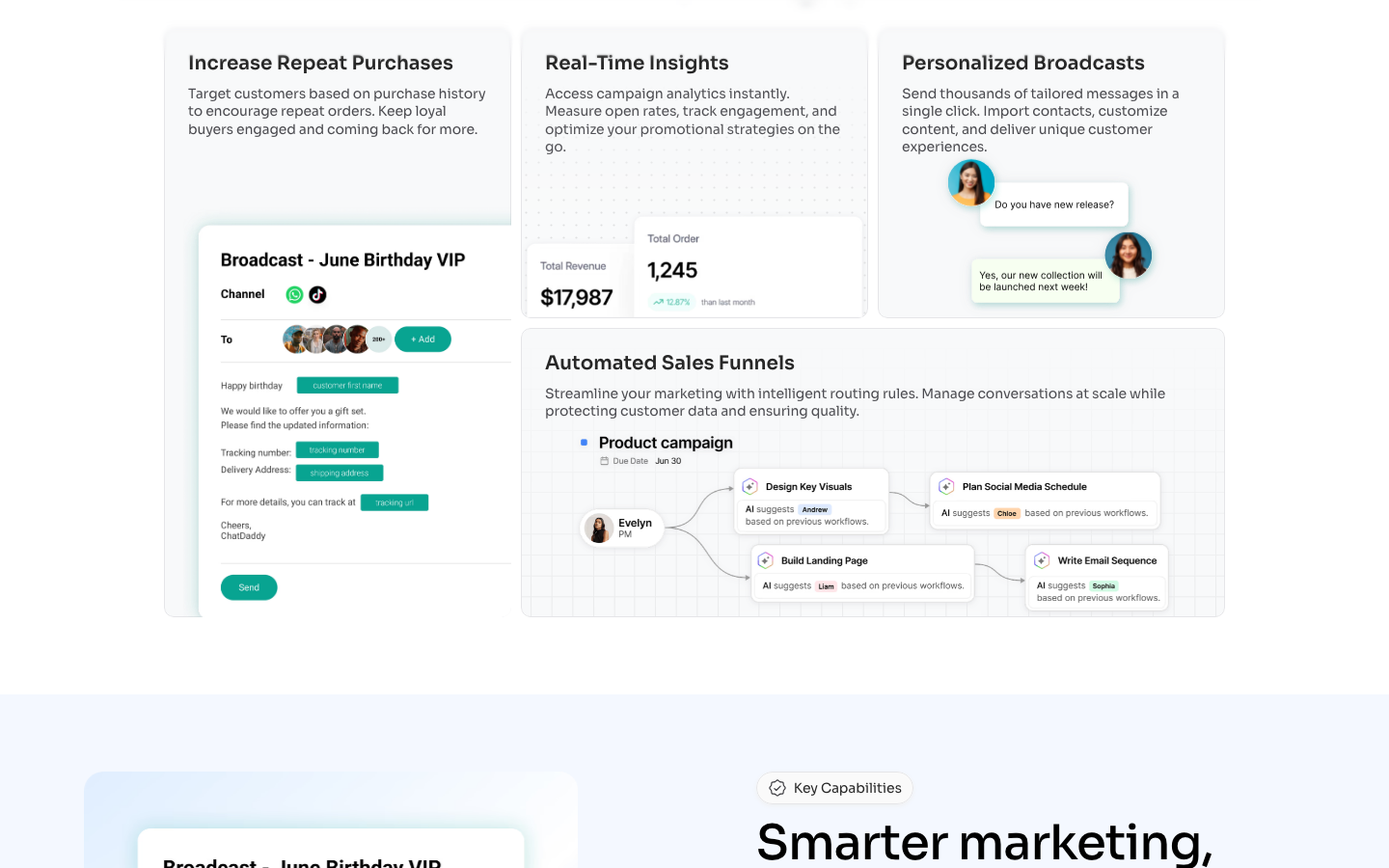
Mass messaging is dead. Personalized broadcasting — sending segmented messages to opted-in lists with dynamic fields like first name, purchase history, or location — delivers 3-4x higher click-through rates than generic blasts. In 2026, WhatsApp's delivery algorithm actively deprioritises low-engagement broadcasts, making personalization a prerequisite for deliverability, not just a nice-to-have.
Best practice: segment contacts by lifecycle stage (new leads, active customers, lapsed buyers), use approved templates with dynamic variables, and send at locally optimized times based on past engagement data. ChatDaddy's broadcast tool supports unlimited segmentation and scheduled sends.
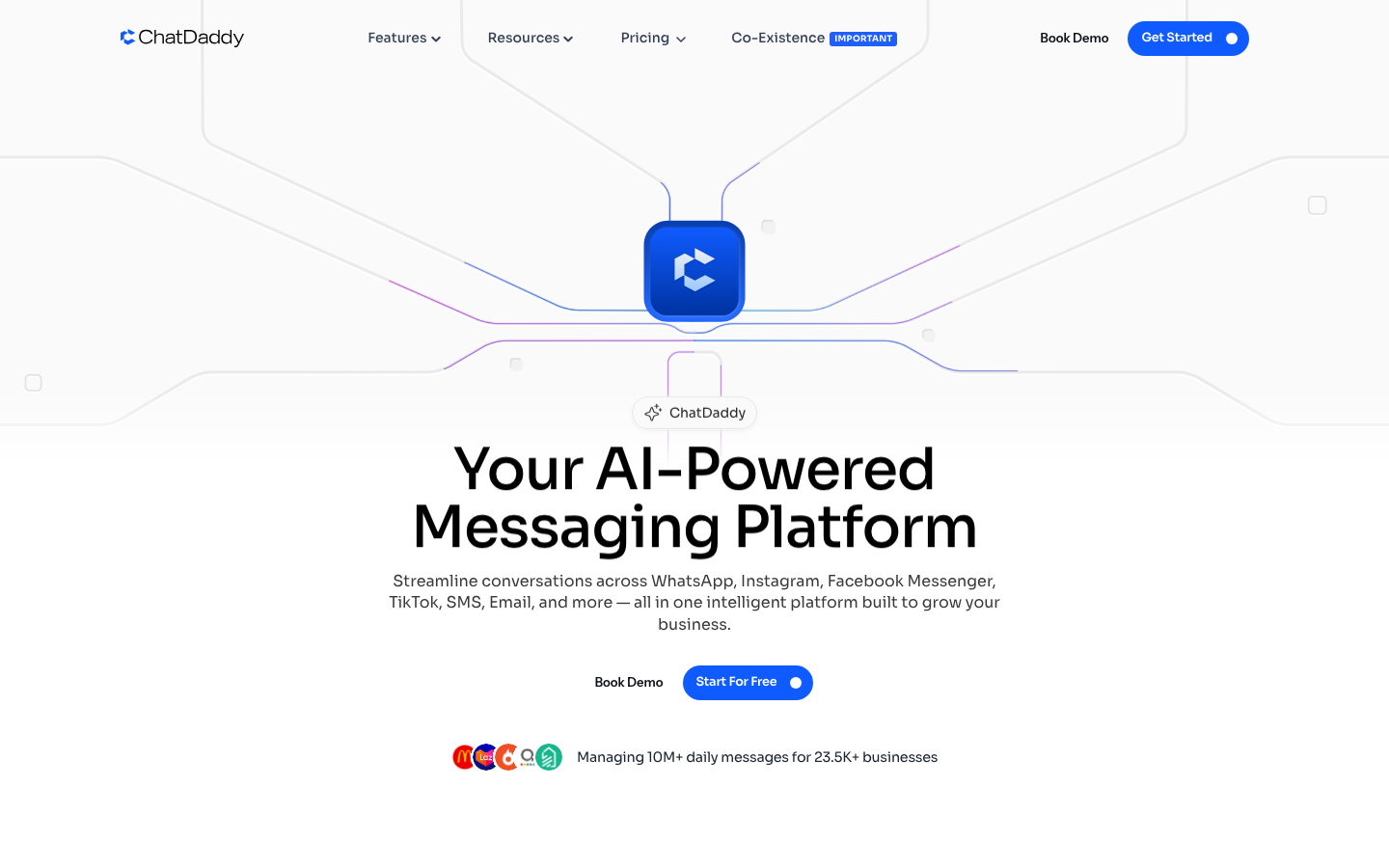
ChatDaddy Broadcast Manager — personalized WhatsApp broadcast campaigns at scale
Strategy 2: Click-to-WhatsApp Ads
Click-to-WhatsApp (CTWA) ads on Facebook and Instagram open a WhatsApp conversation directly when tapped — capturing leads without a landing page, form, or redirect. Conversion rates from CTWA campaigns run 30-40% higher than standard lead generation ads, because the prospect is already in their messaging app and primed to respond. Combine with an instant automated welcome sequence to qualify leads in real time.
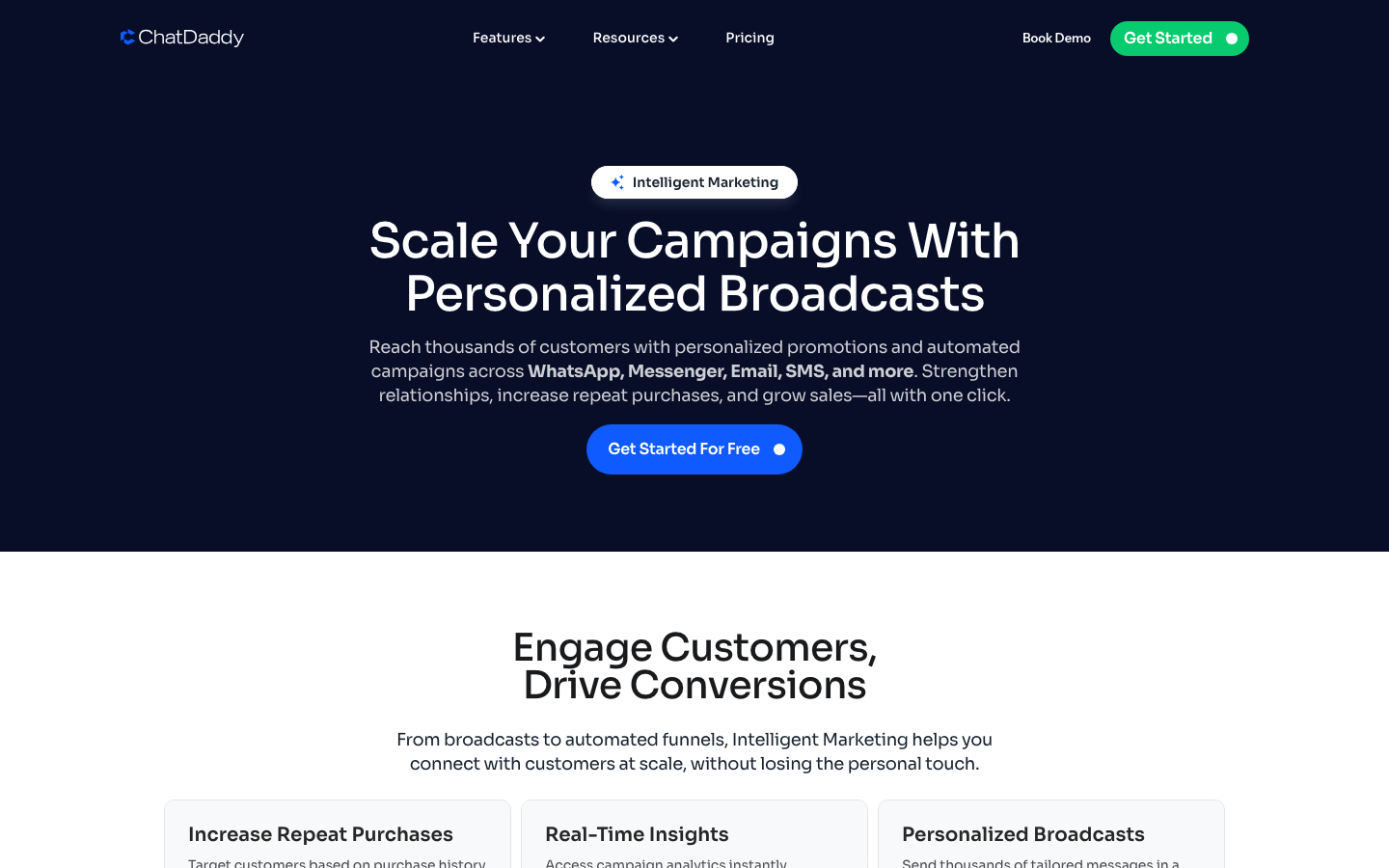
ChatDaddy marketing features — WhatsApp ad integration and campaign management
Strategy 3: Automated Customer Journeys
Automation transforms WhatsApp from a reactive support channel into a revenue-generating machine. Triggered workflows — activated by purchase events, abandoned carts, form fills, or time delays — deliver the right message at exactly the right moment without manual intervention. Common automated sequences include: welcome flows, onboarding drips, cart recovery (up to 60% recovery rate), post-purchase follow-ups, and re-engagement campaigns for dormant contacts.
ChatDaddy's visual drag-and-drop automation builder lets you map multi-step journeys with conditional branching, time delays, and channel fallbacks — no coding required. Connect triggers from Shopify, WooCommerce, HubSpot, or any platform via webhook to launch sequences automatically.
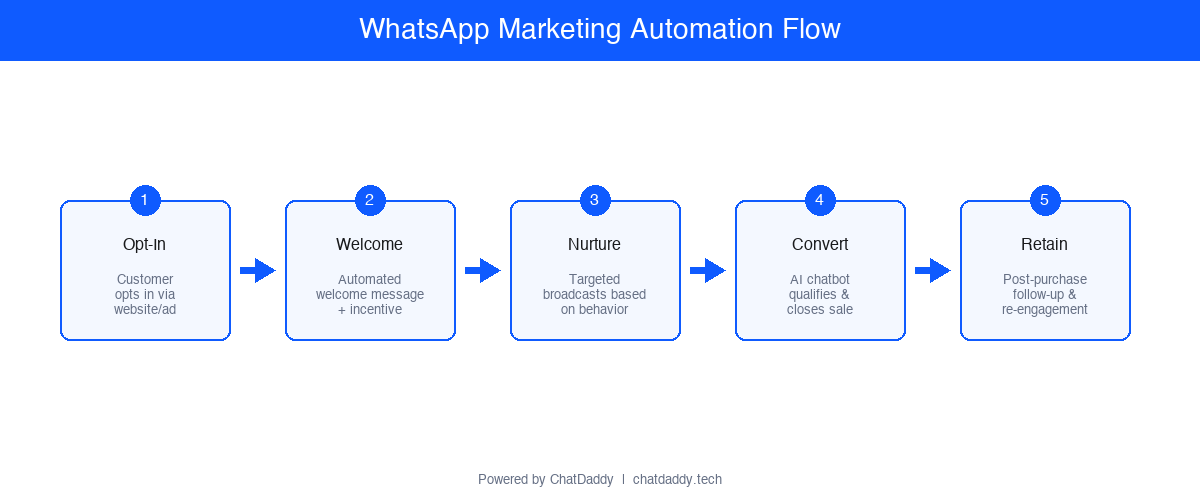
Automated customer journey flow — triggers, branching, and multi-step sequences
Strategy 4: AI-Powered Chatbots
AI chatbots handle 80%+ of routine customer queries — product questions, order status, FAQs, appointment booking — freeing your human agents for high-value conversations. In 2026, large language model (LLM) powered chatbots understand natural language, remember conversation context, and hand off to human agents seamlessly when needed. Businesses using AI chatbots report 40-60% reduction in support costs alongside higher customer satisfaction scores.
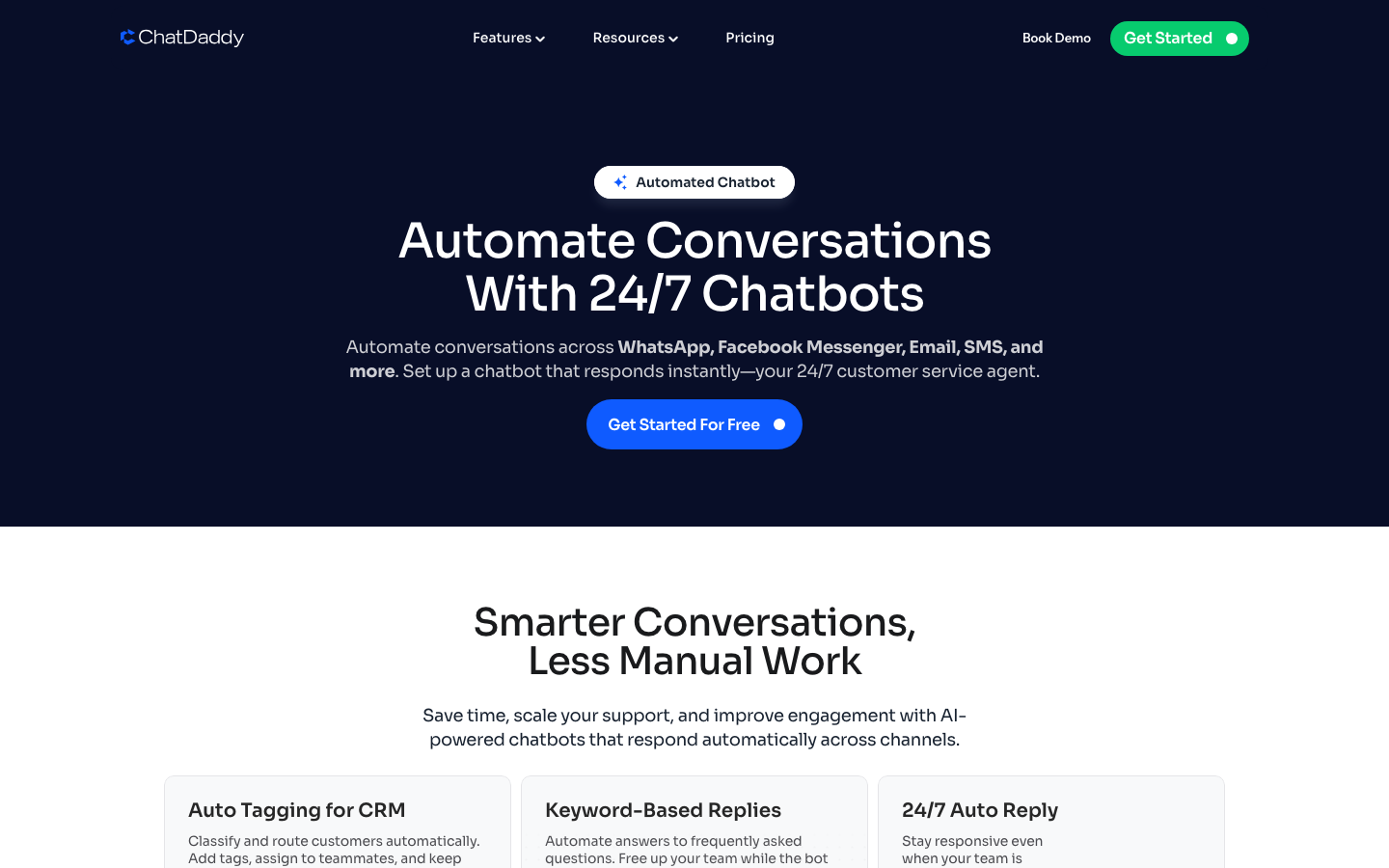
ChatDaddy AI Chatbot — no-code WhatsApp chatbots with natural language understanding
Strategy 5: Interactive Message Templates
WhatsApp's rich template formats — including quick-reply buttons, call-to-action links, carousel messages, and list pickers — dramatically increase engagement versus plain text. Interactive templates see 2x higher response rates compared to text-only messages. Use button templates for appointment confirmations, list messages for product selection, and carousel templates for showcasing multiple products or features.
Interactive WhatsApp message templates — buttons, carousels, and rich media
Strategy 6: WhatsApp Commerce Catalogs
WhatsApp Commerce lets businesses showcase products directly inside the chat interface via an in-app shop. Customers browse, select, and purchase without ever leaving WhatsApp. In 2026, the integration with Shopify, WooCommerce, and Meta's Commerce Manager is seamless — syncing product inventory, prices, and images automatically. Businesses using in-chat commerce report 25-35% higher average order values compared to link-redirect flows, driven by the frictionless buying experience.
ChatDaddy platform — WhatsApp commerce and feature overview
Strategy 7: Shared Team Inbox for Conversational Selling
Conversational selling at scale requires a structured inbox where multiple agents can collaborate on WhatsApp conversations — with routing rules, labels, internal notes, SLA tracking, and CRM integration. A shared team inbox turns WhatsApp into an accountable, measurable sales channel rather than a chaotic personal phone number.
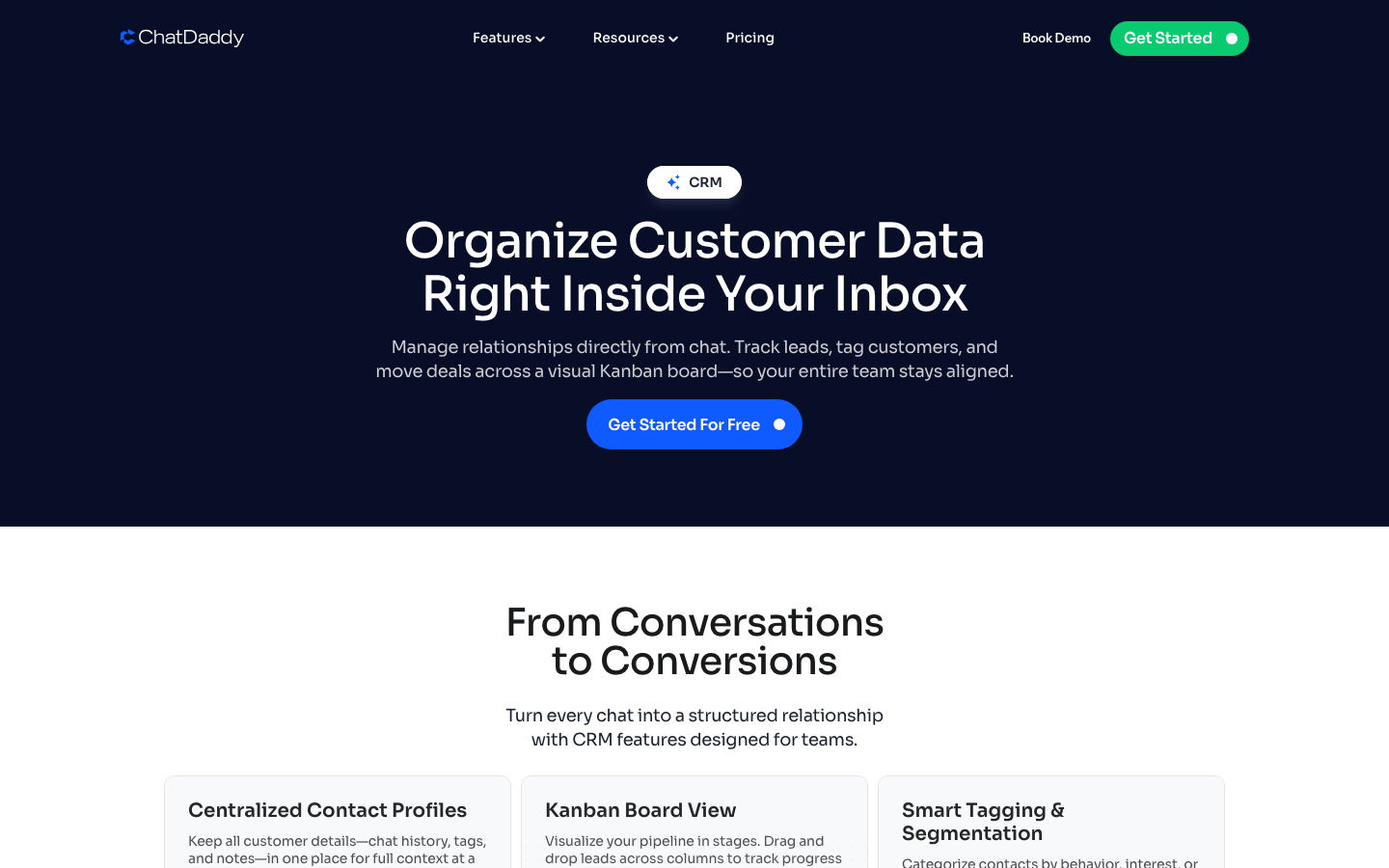
ChatDaddy CRM — shared team inbox with conversation routing and pipeline tracking
ChatDaddy shared inbox — multi-agent collaboration with routing and SLA tracking
3. How to Stay Compliant With WhatsApp Marketing Rules
3.1 Opt-In Requirements
Every contact you message on WhatsApp must have explicitly opted in to receive business messages from you. Implied consent (e.g., a customer emailed you once) is not sufficient. Valid opt-in methods include:
- WhatsApp opt-in widgets on your website
- Keyword-triggered opt-ins (customer messages your number first)
- In-store QR codes
- Tick-box consent on purchase/registration forms
Document every opt-in with timestamp and source for compliance records.
3.2 Template Approval
All proactive business-initiated messages on WhatsApp must use pre-approved Message Templates (formerly HSMs). Templates are submitted through the WhatsApp Business Manager and reviewed by Meta within 24-48 hours. Templates must not contain prohibited content (spam, misleading claims, adult content), and must clearly identify your business. In 2026, Meta has introduced AI-powered template review that flags potential policy violations before submission, reducing rejection rates.
3.3 Quality Rating
Your WhatsApp quality rating (Green / Yellow / Red) directly controls your messaging limits:
- Green rating (low block/report rates) unlocks automatic tier upgrades
- Yellow rating triggers a warning and temporary limit reduction
- Red rating can result in account suspension
Monitor your quality rating daily in the WhatsApp Business Manager dashboard. Key factors: message relevance, send frequency, and opt-in quality.
3.4 BSUID and Privacy Changes
Meta is rolling out Business-Specific User IDs (BSUIDs) — pseudonymous identifiers that replace raw phone numbers as the primary contact identifier in the API. This change, expected to be fully implemented by Q3 2026, is designed to protect user privacy and prevent contact data from being exported and misused across platforms. Businesses using ChatDaddy will be automatically migrated when Meta completes the rollout.
4. How to Measure WhatsApp Marketing Success
| KPI | Target Benchmark | Warning Zone | Action Required |
|---|---|---|---|
| Delivery Rate | 95-99% | < 90% | < 85% |
| Open Rate | 85-98% | < 70% | < 50% |
| Click-Through Rate | 30-60% | < 20% | < 10% |
| Conversion Rate | 8-15% | < 5% | < 2% |
| Response Rate | 25-45% | < 15% | < 5% |
| Block/Report Rate | < 0.5% | > 1% | > 2% |
| Quality Rating | Green | Yellow | Red |
| Opt-Out Rate | < 2% | > 3% | > 5% |
Table 2: WhatsApp marketing KPI benchmarks and action thresholds — 2026
Attribution Best Practices
- Use UTM parameters on all links in WhatsApp messages to track traffic in Google Analytics / GA4.
- Implement WhatsApp-specific landing pages or coupon codes to attribute offline and in-store conversions.
- Connect your WhatsApp platform to your CRM (e.g., HubSpot, Salesforce) to map message interactions to deal pipeline stages.
- Use ChatDaddy's native analytics dashboard to monitor delivery, open, click, and response metrics at the campaign and template level.
- Set up custom conversion events in Meta's Conversions API to close the attribution loop between WhatsApp interactions and website purchases.
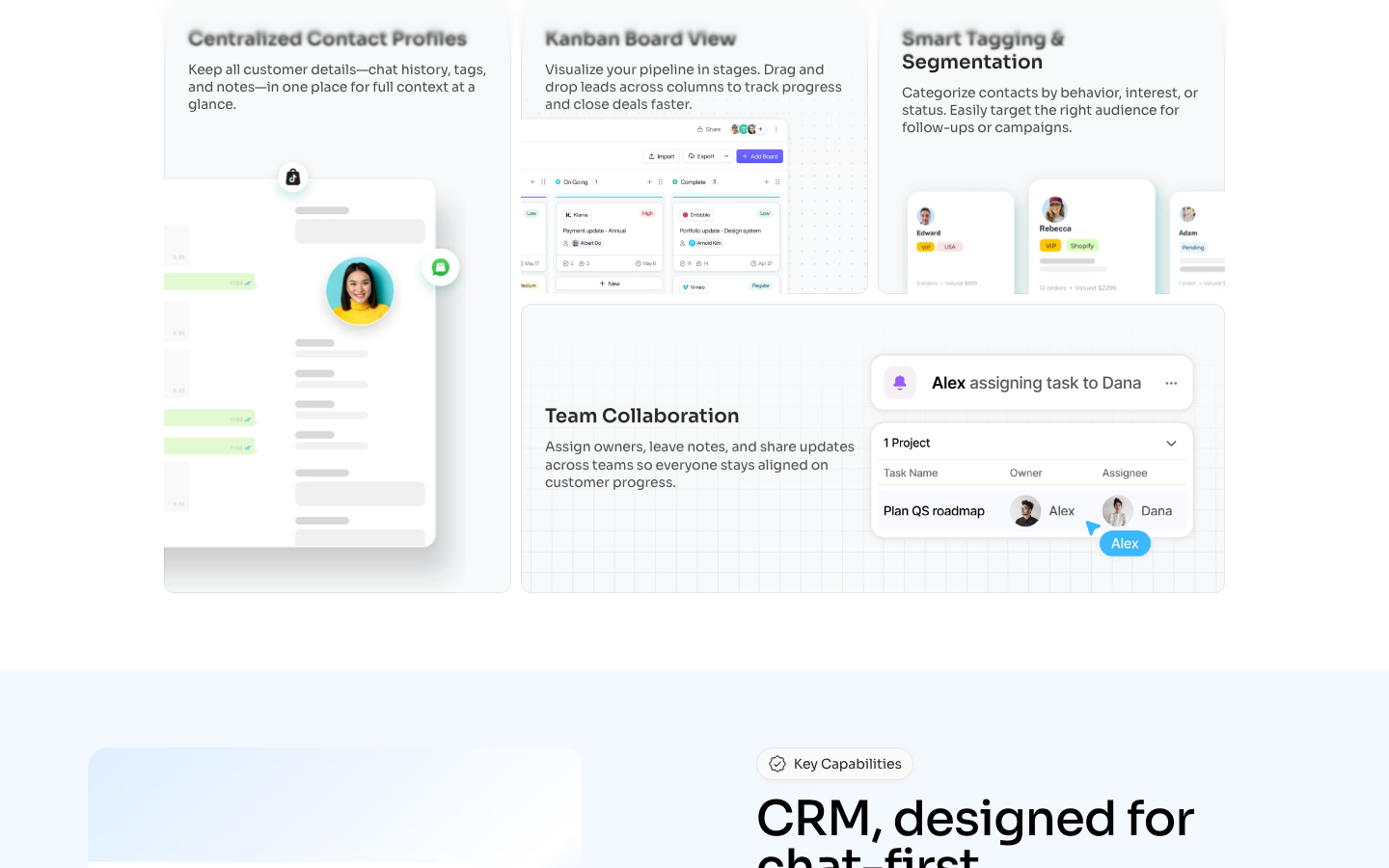
ChatDaddy CRM — analytics dashboard for tracking WhatsApp marketing KPIs
5. How to Get Started With WhatsApp Marketing
Step 1: Apply for WhatsApp Business API Access
You need a Meta Business Manager account and a dedicated phone number (not currently on WhatsApp). Apply through a Meta ISV Partner like ChatDaddy for faster approval (typically 24-72 hours) and ongoing API support.
Step 2: Verify Your Business
Complete Meta's business verification process by submitting your business registration documents, website, and contact details. Verified businesses get a higher initial messaging tier and can display a green verified badge.
Step 3: Set Up Your WhatsApp Business Profile
Configure your business profile with logo, description, category, business hours, website URL, and address. A complete profile improves customer trust and your quality score from day one.
Step 4: Import Opted-In Contacts
Upload your opted-in contact list via CSV or sync directly from your CRM. Ensure every contact has verifiable opt-in consent. ChatDaddy supports direct CRM integration with HubSpot, Salesforce, Zoho, and more.
Step 5: Create and Submit Message Templates
Design your first templates: a welcome message, a promotional broadcast template, and a customer service follow-up. Submit through ChatDaddy's template manager for streamlined Meta approval.
Step 6: Build Your First Automated Welcome Flow
Create a simple automation: when a contact opts in or messages for the first time, send a welcome message with quick-reply buttons for common queries. This immediately demonstrates the value of WhatsApp to your new contacts.
Step 7: Launch, Measure, and Optimize
Send your first broadcast to a small test segment (500-1,000 contacts), monitor your KPIs in real time, and iterate on templates, timing, and segmentation based on performance data. Scale messaging limits progressively as your quality rating strengthens.
ChatDaddy Broadcast Manager — segmented broadcast campaigns at scale
Ready to Launch Your WhatsApp Marketing Strategy?
ChatDaddy is a Meta ISV Partner. Get API access, automation tools, and dedicated support — trusted by 23,500+ businesses worldwide.
Start Your Free TrialRelated Articles
- WhatsApp Marketing Tool
- Best WhatsApp Broadcast Tool
- WhatsApp Marketing Strategy 2026
- WhatsApp Marketing in Dubai
- Click-to-WhatsApp Ads Guide
6. Frequently Asked Questions
What is WhatsApp marketing?
WhatsApp marketing is the use of WhatsApp's Business API to send promotional messages, automate customer journeys, provide support, and drive sales through the world's most popular messaging platform. It delivers 98% open rates and 12x higher conversions than email, making it the highest-performing direct marketing channel available in 2026.
Is WhatsApp marketing legal?
Yes — WhatsApp marketing is legal when conducted through the official Business API with explicit opt-in consent from recipients, Meta-approved message templates, and compliance with applicable data protection laws (GDPR, CCPA, PDPA). Sending unsolicited bulk messages via unofficial methods violates Meta's Terms of Service and risks account suspension. Always obtain documented consent before messaging.
How much does WhatsApp marketing cost?
WhatsApp marketing costs include the platform API fee and per-message conversation charges. In 2026, Meta's per-message pricing ranges from $0.001 to $0.085 per message depending on country and message category (marketing, utility, authentication). Combined with a provider like ChatDaddy, total costs average $0.50-$2.00 per conversion — significantly lower than paid search or email marketing at scale.
What is a good open rate for WhatsApp marketing?
A good open rate for WhatsApp marketing is 85-98%. The platform benchmark consistently delivers 95%+ open rates for businesses maintaining a Green quality rating and sending relevant, opted-in content. If your open rate falls below 70%, review your contact list quality, message relevance, and sending frequency.
Can small businesses use WhatsApp marketing?
Yes — small businesses can use WhatsApp marketing effectively through the WhatsApp Business API via providers like ChatDaddy, which offer affordable plans starting from entry-level tiers. With as few as 500 opted-in contacts, automated welcome flows, and a single broadcast template, a small business can generate measurable ROI.
7. Conclusion
WhatsApp marketing in 2026 is not optional for businesses serious about growth — it is the highest-performing, most cost-effective direct marketing channel available. With 3.2 billion users, 98% open rates, and 12x conversion advantage over email, the businesses that master WhatsApp marketing now will be the category leaders of 2027.
The strategies in this guide — personalized broadcasts, automated journeys, AI chatbots, interactive templates, WhatsApp commerce, and conversational selling — are proven by ChatDaddy's experience with 23,500+ businesses managing 10 million+ daily messages. Start with compliance, build your opted-in list, and deploy automation to scale without adding headcount.
The window to build a competitive WhatsApp marketing advantage is right now, before your competitors do. Get your WhatsApp Business API access through ChatDaddy and launch your first campaign this week.