WhatsApp Customer Retention: 9 Proven Strategies to Keep Buyers Coming Back in 2026
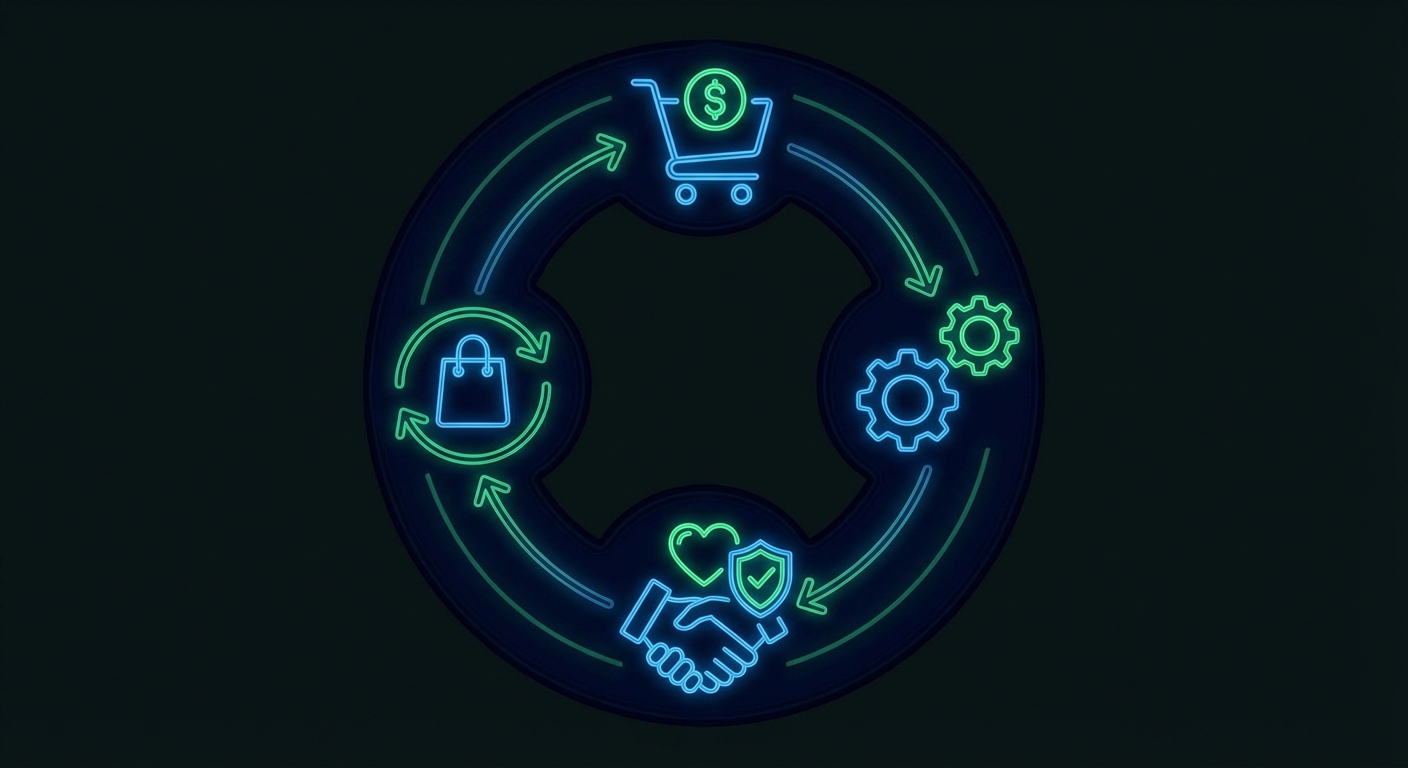
Acquiring a new customer costs 5-7x more than retaining an existing one. Yet most businesses pour 80% of their marketing budget into acquisition while existing customers quietly drift away. Here is the number that should change your priorities: a 5% increase in customer retention drives a 25-95% increase in profits (Harvard Business School and Bain & Company) — and businesses using WhatsApp for retention report 25-40% higher repeat purchase rates within 6 months.
WhatsApp is the most powerful customer retention channel available in 2026. With 98% open rates, instant two-way communication, and the ability to deliver personalized experiences at scale, WhatsApp lets you maintain direct, personal relationships with customers in a way that email, push notifications, and retargeting ads simply cannot match.
This guide covers seven proven WhatsApp customer retention strategies that keep buyers coming back, increase repeat purchase rates, and build long-term customer loyalty. Each strategy includes practical implementation steps using ChatDaddy's WhatsApp Business API platform, so you can start executing immediately.
Table of Contents
- Why Customer Retention Matters More Than Ever
- Strategy 1: Personalized Post-Purchase Flows
- Strategy 2: WhatsApp Loyalty Programs
- Strategy 3: VIP Customer Segments
- Strategy 4: Proactive Re-Engagement Campaigns
- Strategy 5: Feedback Collection and Action Loops
- Strategy 6: Win-Back Automation for Lapsed Customers
- Strategy 7: Community Building Through WhatsApp
- Frequently Asked Questions
- Conclusion
1. Why Customer Retention Matters More Than Ever
The economics of customer retention are striking — and getting more important as acquisition costs continue to rise:
| Retention Metric | Value | Source |
|---|---|---|
| Cost to acquire new customer vs retain existing | 5-7x more expensive | Harvard Business Review |
| Profit increase from 5% retention improvement | 25-95% | Bain & Company |
| Repeat customer average order value vs new | 67% higher | BIA Advisory Services |
| Probability of selling to existing customer | 60-70% | Marketing Metrics |
| Probability of selling to new prospect | 5-20% | Marketing Metrics |
| Revenue from top 20% of loyal customers | 80% of total revenue | Gartner |
Table 1: Customer retention economics — key metrics
In 2026, the retention opportunity on WhatsApp is particularly compelling because of three converging trends:
- Rising acquisition costs — Meta and Google ad CPMs have increased 35-50% since 2023. Every customer you retain reduces your dependence on increasingly expensive paid acquisition.
- WhatsApp as the default communication channel — With 3.2 billion users globally, WhatsApp is where your customers already spend their time. Retention messages delivered here get seen and acted upon.
- Automation maturity — Platforms like ChatDaddy now offer sophisticated automation tools that make retention workflows scalable without additional headcount.

Figure 1: Customer retention economics — why a small improvement in retention drives outsized profit growth
2. Strategy 1: Personalized Post-Purchase Flows
The most critical retention window is the first 7-14 days after purchase. This is when buyer's remorse is highest, and when a thoughtful follow-up sequence can transform a one-time buyer into a repeat customer. WhatsApp's 98% open rate means your post-purchase messages are virtually guaranteed to be seen.
The Post-Purchase Sequence
Here is a proven 7-message post-purchase flow that ChatDaddy customers use to drive repeat purchases:
- Immediate: Order confirmation — Send order details, expected delivery date, and a "Track your order" button. This builds confidence and reduces support tickets.
- Day 1: Shipping notification — "Your order is on its way!" with real-time tracking link. Keep the customer informed and excited.
- Day 3-5: Delivery confirmation — "Your order has been delivered! Need help with anything?" with quick-reply buttons for common questions.
- Day 7: Product tips — Send a personalized message with tips for getting the most out of their purchase. For a skincare product: "Here are 3 ways to maximize your results." For electronics: "Quick setup guide to unlock all features."
- Day 10: Cross-sell recommendation — "Customers who bought [product] also love [complementary product]" with a product image and one-tap purchase button via the shop catalog.
- Day 14: Review request — "How are you enjoying [product]? We'd love your feedback!" with a quick star rating or a link to your review page.
- Day 30: Re-purchase reminder — For consumable products, send a timely reminder before the product runs out. "Time to restock? Tap below to reorder with 10% off."
The key is personalization. Each message uses the customer's first name, references the specific product they bought, and adapts timing based on the product category. ChatDaddy's automation engine supports all of this with conditional logic and dynamic variables pulled from your CRM or e-commerce platform.

Figure 2: WhatsApp post-purchase automation flow — 7-step retention sequence
3. Strategy 2: WhatsApp Loyalty Programs
Traditional loyalty programs suffer from a fundamental problem: low engagement. The average consumer belongs to 14.8 loyalty programs but actively uses only 6.7, according to Bond Brand Loyalty research. The gap exists because most programs require downloading an app, creating an account, remembering a login, or checking email for updates.
WhatsApp eliminates all that friction. A WhatsApp loyalty program operates entirely inside the messaging app your customers already use every day.
How a WhatsApp Loyalty Program Works
- Enrollment — Customer opts in via a WhatsApp message, QR code in-store, or website widget. No app download, no account creation. Their WhatsApp number is their loyalty ID.
- Points tracking — After each purchase, send an automated WhatsApp message: "You just earned 50 points! Your balance: 350 points. 150 more to unlock your next reward." Customers can check their balance anytime by messaging "Points" or tapping a quick-reply button.
- Reward redemption — When a customer reaches a reward threshold, send a message with a one-tap redemption button. "You've unlocked a free shipping reward! Tap below to apply it to your next order."
- Exclusive offers — Send loyalty-tier-specific promotions. Gold members get early access to new products. Platinum members get exclusive discounts. Use ChatDaddy's broadcast segmentation to target each tier separately.
- Referral program — "Share this link with a friend. When they make their first purchase, you both get 100 bonus points." WhatsApp's native sharing makes referral distribution effortless.
ChatDaddy customers running WhatsApp loyalty programs report 45-65% active engagement rates (members checking balance or redeeming rewards at least once per month) versus 15-25% for app-based programs.
4. Strategy 3: VIP Customer Segments
Not all customers are equal. Your top 20% of customers typically generate 80% of your revenue (the Pareto principle). These VIP customers deserve — and respond to — differentiated treatment. WhatsApp is the ideal channel for VIP engagement because it feels personal, direct, and exclusive.
VIP Segmentation Tiers
| Tier | Criteria | WhatsApp Perks |
|---|---|---|
| Bronze | 2+ purchases or $100+ lifetime value | Birthday messages, seasonal offers, early sale access (24 hours) |
| Silver | 5+ purchases or $500+ lifetime value | All Bronze perks + monthly exclusive offers, priority support queue |
| Gold | 10+ purchases or $1,500+ lifetime value | All Silver perks + dedicated account manager on WhatsApp, new product previews, free shipping |
| Platinum | 20+ purchases or $5,000+ lifetime value | All Gold perks + personalized product recommendations, invitation to exclusive events, direct line to founders |
Table 2: VIP customer segmentation tiers and WhatsApp-specific perks
The implementation is straightforward with ChatDaddy's CRM: tag customers with their VIP tier based on purchase data synced from your e-commerce platform, then use segment-based broadcasts and automations to deliver tier-appropriate communications. Gold and Platinum customers can even be assigned to specific agents in the team inbox for personal account management.
"Treating your best customers like they matter is the highest-ROI retention investment you can make. WhatsApp makes it scalable."
5. Strategy 4: Proactive Re-Engagement Campaigns
The biggest retention mistake is waiting for customers to come back on their own. Proactive re-engagement means reaching out before a customer lapses, not after. WhatsApp's near-100% visibility means your re-engagement message will actually be seen — unlike email, where your re-engagement campaign competes with 100 other unread messages.
Re-Engagement Trigger Points
- 30 days since last purchase — Light touch. "Hey [Name], we've got new arrivals we think you'll love based on your last order." Include a product carousel or catalog link.
- 60 days since last purchase — Value reminder. "We miss you, [Name]! Here's what's new since your last visit + a 15% welcome-back offer." Include a discount code with 7-day expiry.
- 90 days since last purchase — Escalated incentive. "It's been a while, [Name]. We'd love you back — here's 25% off your next order, valid for 48 hours." Create urgency with a short expiration window.
- Browse-but-no-buy triggers — If a customer clicks on a product link in a WhatsApp message but does not purchase, follow up 24 hours later with: "Still thinking about [product]? Here's a closer look." Include product images and a one-tap purchase option.
ChatDaddy's automation engine supports all these triggers using purchase date tracking and event-based workflows. Set it up once, and the system automatically identifies and re-engages at-risk customers every day without manual intervention.

Figure 3: WhatsApp re-engagement timeline — escalating outreach for at-risk customers
6. Strategy 5: Feedback Collection and Action Loops
Feedback is not just a data collection exercise — it is a retention tool. Customers who feel heard are 4.6x more likely to remain loyal to a brand, according to Salesforce research. WhatsApp makes feedback collection frictionless and the response loop personal.
The Feedback-Action Loop
- Collect — Send a quick feedback request 5-7 days after delivery. Use quick-reply buttons for rating (Great / Good / Not Great) to minimize friction. For customers who rate "Not Great," trigger an immediate follow-up asking what went wrong.
- Analyze — Aggregate feedback data in your CRM. Identify patterns: which products generate the most complaints? Which delivery regions have the lowest satisfaction? Which customer segments are happiest?
- Act — Fix the issues identified. This is where most businesses stop — but the next step is what drives retention.
- Close the loop — Message customers who reported issues: "Hey [Name], you mentioned [issue] in your recent feedback. We've [specific action taken]. We appreciate you helping us improve!" This single message transforms a negative experience into a loyalty-building moment.
For positive feedback, the loop is equally valuable: "Thanks for the great review, [Name]! We'd love if you shared your experience — here's a referral link that earns you 15% off your next order." Convert satisfied customers into advocates.
7. Strategy 6: Win-Back Automation for Lapsed Customers
Once a customer has been inactive for 90+ days, they are considered "lapsed." Standard re-engagement (Strategy 4) has already been attempted. Win-back campaigns are more aggressive and structured — a last-effort sequence before marking the contact as dormant.
The 3-Message Win-Back Sequence
Message 1 (Day 90): The Value Reminder
"Hi [Name], it's been a while since we connected! Here's what's new: [2-3 bullet points about new products, features, or improvements relevant to their purchase history]. We'd love to see you back."
Message 2 (Day 97): The Incentive
"[Name], we've saved something special for you: 30% off your next order, our biggest discount of the year. Valid for 5 days only. Tap below to shop." Include a pre-built discount code and a direct CTA button to your shop.
Message 3 (Day 104): The Breakup Message
"[Name], we don't want to keep messaging if you're not interested. Would you like to: (A) Stay subscribed — we'll keep you updated, (B) Unsubscribe — no hard feelings." Giving control back to the customer paradoxically increases re-engagement. 20-30% of recipients who receive a "breakup" message choose to stay subscribed and re-engage, because the honesty builds trust.
If the customer does not respond to any of the three messages, move them to a dormant segment and stop sending marketing messages. This protects your WhatsApp quality rating and ensures you are only messaging people who want to hear from you.
8. Strategy 7: Community Building Through WhatsApp
Retention is not just about transactions — it is about relationships. WhatsApp communities and groups create a space where customers connect with each other and with your brand on a deeper level than any marketing message can achieve.
Community Strategies That Work
- Product user groups — Create groups for customers who bought the same product or product category. Share tips, answer questions, and let customers help each other. A fitness equipment brand might have groups for "Home Gym Beginners" and "Advanced Training." Members stay engaged with the brand because they are engaged with the community.
- Early access communities — Invite your best customers to a community where they get first access to new products, behind-the-scenes content, and input on upcoming releases. This creates a sense of ownership and exclusivity that strengthens loyalty.
- Local communities — For businesses with physical locations, create location-based WhatsApp communities for local customers. Share store events, local promotions, and community news.
- Content-driven communities — Share valuable, non-promotional content in a broadcast channel or community. A skincare brand might share weekly skincare tips. A bookstore might share weekly reading recommendations. The content provides ongoing value that keeps customers connected to the brand between purchases.
ChatDaddy supports community management at scale through its team inbox, allowing multiple agents to moderate and engage across communities while maintaining consistent brand voice and response times.

Figure 4: WhatsApp customer retention — 7 strategies overview
Build Your WhatsApp Retention Engine
ChatDaddy gives you everything you need to retain customers on WhatsApp: automated post-purchase flows, loyalty programs, VIP segmentation, win-back campaigns, and community management. Trusted by 23,500+ businesses worldwide.
Start Your Free Trial9. Frequently Asked Questions
How does WhatsApp improve customer retention?
WhatsApp improves customer retention through its 98% open rate (ensuring messages are seen), instant two-way communication (enabling real-time support and engagement), and personalized automation (delivering the right message at the right time). Businesses using WhatsApp for retention report 25-40% higher repeat purchase rates compared to email-only retention strategies.
What is a good customer retention rate?
A good customer retention rate varies by industry: e-commerce averages 30-40%, SaaS averages 85-95%, and subscription businesses average 70-90%. With WhatsApp-based retention strategies, businesses typically see a 15-25 percentage point improvement over their baseline retention rate within 3-6 months of implementation.
How often should I message existing customers on WhatsApp?
For retention messaging, 2-4 messages per month is the optimal frequency for most businesses. This includes transactional updates (order, delivery), one personalized offer or re-engagement message, and one value-add message (tips, content). Over-messaging risks increased block rates and quality rating decline. Monitor your block rate and adjust frequency if it exceeds 0.5%.
Can I run a loyalty program on WhatsApp?
Yes. WhatsApp loyalty programs operate entirely in-chat: customers check points, receive rewards, and redeem offers through WhatsApp messages and quick-reply buttons. No separate app or account is needed. WhatsApp loyalty programs see 3-4x higher active engagement rates than app-based programs because there is zero friction — customers are already in WhatsApp daily.
How do I win back lapsed customers on WhatsApp?
Use a structured 3-message win-back sequence for customers inactive 90+ days: (1) a value reminder highlighting what's new, (2) an escalated incentive with a meaningful discount and short expiry, and (3) a "breakup" message giving them the choice to stay or unsubscribe. This sequence recovers 8-15% of lapsed customers. Automate it through ChatDaddy's workflow builder.
What WhatsApp metrics should I track for customer retention?
Key retention metrics to track via WhatsApp: repeat purchase rate (target 30%+ improvement after 6 months), 90-day churn rate (target below 25%), win-back conversion rate (target 8-15%), message open rate (95-98% baseline), block/unsubscribe rate (keep below 0.5%), and customer lifetime value. Use ChatDaddy's analytics dashboard to track all metrics at the individual contact and segment level.
How do I personalize WhatsApp retention messages at scale?
Personalize WhatsApp retention messages using dynamic variables in your message templates: {{first_name}}, {{last_purchase_date}}, {{product_name}}, {{loyalty_points}}, and custom fields. ChatDaddy's CRM stores this data and automatically injects variables into bulk broadcasts, creating messages that feel personal even when sent to thousands of customers. Segmentation by purchase history, location, and behavior enables further personalization.
What is the best WhatsApp message to re-engage inactive customers?
The most effective re-engagement messages combine: (1) a personal opener using the customer's first name, (2) a specific reference to their last purchase or interaction, (3) a genuinely valuable offer (discount, new product, exclusive content), and (4) a clear single CTA. Avoid generic "we miss you" messages — specificity and relevance drive re-engagement. Test sending times (Tuesday-Thursday, 10am-12pm local) for highest open rates.
10. Conclusion
Customer retention is the most profitable investment you can make in 2026. A 5% improvement in retention drives 25-95% more profit — and WhatsApp is the channel that makes that improvement achievable at scale. The seven strategies in this guide — personalized post-purchase flows, loyalty programs, VIP segmentation, proactive re-engagement, feedback loops, win-back automation, and community building — provide a comprehensive retention framework that turns one-time buyers into lifelong customers.
The businesses that win in 2026 are not just acquiring customers faster than their competitors. They are keeping customers longer — building compounding value from every relationship. WhatsApp, with its unmatched open rates, instant communication, and personal feel, is the tool that makes this possible.
Start with one strategy — most businesses see the fastest results from post-purchase flows (Strategy 1) — then layer on additional strategies as you see results. ChatDaddy's platform gives you everything you need: automation, CRM, broadcasts, chatbots, and team inbox. Start your free trial today and build a retention engine that keeps buyers coming back.
