WhatsApp API Pricing 2026: Complete Cost Breakdown and Provider Comparison
WhatsApp API pricing changed significantly in 2026, and most guides online are still referencing the old per-conversation model. If you're budgeting for WhatsApp Business API this year, you need to understand the new per-template pricing, free service reply windows, volume discounts, and how different providers mark up Meta's base rates.
In this guide, we break down exactly what Meta charges in 2026, compare pricing across the top WhatsApp API providers — ChatDaddy, WATI, respond.io, and 360dialog — and show you how to estimate your monthly costs based on real usage scenarios. Whether you're sending 1,000 or 100,000 messages per month, you'll know exactly what to expect.
Table of Contents
- How WhatsApp API Pricing Works in 2026
- Meta's Base Rates: What WhatsApp Actually Charges
- 2026 Pricing Changes: What's New
- Provider Pricing Comparison: ChatDaddy vs WATI vs Respond.io vs 360dialog
- Hidden Costs Most Providers Don't Tell You About
- How to Estimate Your Monthly WhatsApp API Cost
- 7 Ways to Reduce Your WhatsApp API Costs
- ChatDaddy Pricing Plans: Full Breakdown
- FAQ
How WhatsApp API Pricing Works in 2026
Understanding WhatsApp API pricing requires separating two layers of cost:
- Meta's messaging charges — what WhatsApp/Meta charges per message, paid through your ISV partner
- ISV platform fees — the monthly subscription your WhatsApp API provider charges for their software (inbox, chatbot, broadcast tools, etc.)
You cannot access the WhatsApp Business API directly from Meta. You must go through a ISV Technology Partner like ChatDaddy, WATI, respond.io, or 360dialog. Each ISV partner charges their own platform fee on top of Meta's messaging rates — and some add markups to the messaging charges too.
The key distinction in 2026 is the message category. Meta now prices messages based on what type they are, not just which conversation window they fall in:
- Service messages — replies to customer-initiated conversations within 24 hours. Free since 2026.
- Marketing templates — promotional outbound messages (offers, announcements, re-engagement). Most expensive category.
- Utility templates — transactional messages (order confirmations, shipping updates, appointment reminders). Mid-range pricing.
- Authentication templates — OTP and verification codes. Lowest per-message cost.
Source: Meta WhatsApp Business Platform Pricing Documentation
Meta's Base Rates: What WhatsApp Actually Charges
Meta sets the base messaging rates, which all ISV partners must pay. Here are the 2026 rates for key markets:
| Country/Region | Marketing (per msg) | Utility (per msg) | Authentication (per msg) | Service (24h reply) |
|---|---|---|---|---|
| United States | $0.0240 | $0.0200 | $0.0135 | Free |
| United Kingdom | $0.0188 | $0.0150 | $0.0104 | Free |
| India | $0.0099 | $0.0042 | $0.0036 | Free |
| Malaysia | $0.0200 | $0.0100 | $0.0050 | Free |
| UAE | $0.0186 | $0.0145 | $0.0097 | Free |
| Brazil | $0.0165 | $0.0080 | $0.0050 | Free |
| Indonesia | $0.0110 | $0.0050 | $0.0040 | Free |
| Singapore | $0.0212 | $0.0150 | $0.0100 | Free |

Important notes on these rates:
- Rates are per message, not per conversation (this changed in 2026)
- Volume discounts of up to 20% are available for businesses sending 100K+ messages monthly
- Service replies within the 24-hour window are completely free — this is a major cost reduction for support-heavy businesses
- Rates change periodically; Meta typically updates pricing quarterly
Source: Sanuker WhatsApp API 2026 Updates
2026 Pricing Changes: What's New
If you've been using the WhatsApp API since 2024 or 2025, here's what changed:
1. Free Service Replies (The Biggest Change)
Previously, every conversation — even customer-initiated ones — incurred a charge. In 2026, all replies to customer messages within 24 hours are free. This is a massive cost reduction for businesses doing primarily customer support. If 70% of your WhatsApp conversations are inbound support, your API messaging costs just dropped by 70%.
2. Per-Template Pricing Replaces Per-Conversation
The old model charged per 24-hour conversation window, regardless of how many messages you sent within it. The new model charges per outbound template message. This means:
- Sending 1 marketing template to 1,000 contacts = 1,000 charges
- Replying to 1,000 inbound messages = 0 charges (within 24h)
- Sending follow-up messages within an open conversation = no additional template charge
3. Volume Discounts Up to 20%
Businesses sending over 100,000 templates per month can negotiate volume discounts through their ISV partner. The discount tiers are approximately:
| Monthly Volume | Discount | Effective Marketing Rate (US) |
|---|---|---|
| Under 10,000 | 0% | $0.0240 |
| 10,000 - 50,000 | 5% | $0.0228 |
| 50,000 - 100,000 | 10% | $0.0216 |
| 100,000 - 500,000 | 15% | $0.0204 |
| 500,000+ | 20% | $0.0192 |
4. Instant 100K Daily Messaging Limit
Verified businesses now start with a 100,000 daily message limit instead of the old graduated system (1K to 10K to 100K). No more waiting weeks to scale your messaging. This doesn't affect pricing directly, but it removes a major barrier for businesses planning large campaigns.
5. WhatsApp Usernames (Coming June 2026)
While not a pricing change per se, WhatsApp usernames will let users hide phone numbers. This may affect how businesses collect and manage contacts, but messaging pricing remains the same whether you reach a user by phone number or username.
Provider Pricing Comparison: ChatDaddy vs WATI vs Respond.io vs 360dialog
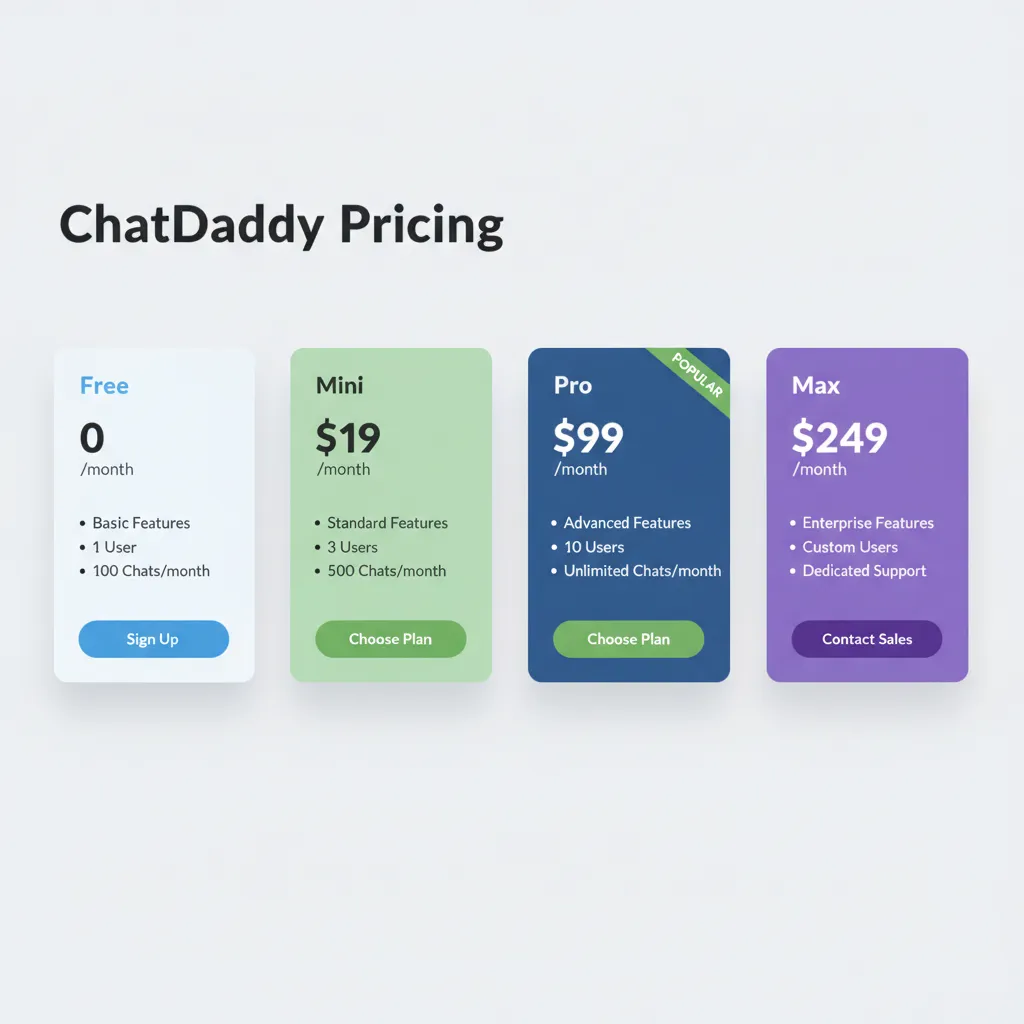
Here's the complete cost comparison across the top 4 WhatsApp API providers:
| Cost Component | ChatDaddy | WATI | Respond.io | 360dialog |
|---|---|---|---|---|
| Free Plan | Yes (2 agents, 250 contacts) | No | No | No |
| Entry Plan | $119/mo (Basic) | $49/mo (Growth) | $99/mo (Starter) | $49/mo + per-msg markup |
| Mid Plan | $299/mo (Pro) | $99/mo (Pro) | $279/mo (Growth) | $99/mo + per-msg markup |
| Top Plan | $799/mo (Max) | $299/mo (Business) | $699/mo (Enterprise) | Custom |
| Agent Seats (Entry) | Up to 15 | 5 agents | 5 users | N/A (API only) |
| Per-Agent Cost | $0 | $12/agent/mo | $20/user/mo | $0 |
| Message Markup | None (Meta rates) | Included in plan | Included in plan | $0.005/message |
| Chatbot Builder | All plans (AI on Pro+) | Pro+ only | All plans | No (API only) |
| Broadcast | Unlimited | Limited by plan | Limited | Unlimited (API) |
| Meta ISV Partner | Yes | Yes | Yes | Yes |
| Coexistence | Yes — use API + WhatsApp Business App on same number (free) | No | No | No |
| Best For | SMBs wanting full features at lowest cost | India-focused SMBs | Enterprise teams | Developers needing raw API |
Real-World Cost Scenario: 10-Person Team, 5,000 Messages/Month
Let's calculate the actual monthly cost for a typical business with 10 team members sending 5,000 outbound marketing messages and handling 3,000 inbound support conversations per month (US market):
| Cost Item | ChatDaddy | WATI | Respond.io | 360dialog |
|---|---|---|---|---|
| Platform Fee | $119 (Basic) | $49 (Growth) | $99 (Starter) | $49 |
| Extra Agent Seats | $0 (unlimited) | $60 (5 extra x $12) | $100 (5 extra x $20) | $0 |
| Marketing Messages (5K x $0.024) | $120 | $120 | $120 | $120 |
| ISV Message Markup | $0 | $0 | $0 | $25 (5K x $0.005) |
| Service Replies (3K) | Free | Free | Free | Free |
| Total Monthly Cost | $239 | $229 | $319 | $194 |
ChatDaddy saves this business $90-180/month compared to alternatives — that's $1,080-2,160 per year. The savings come from zero per-agent fees and no message markups. For larger teams, the gap widens even further.
Hidden Costs Most Providers Don't Tell You About
When comparing WhatsApp API providers, the advertised monthly price is rarely the full story. Watch out for these hidden costs:
1. Per-Agent Fees
Most platforms advertise a low starting price but limit you to 5 agents. Each additional agent costs $12-20/month. A 15-person support team on WATI's Growth plan pays an extra $120/month just for agent seats. ChatDaddy includes up to 15 teammates on all paid plans — no per-seat charges.
2. Message Markups
Some ISV partners add their own per-message fee on top of Meta's rates. 360dialog charges $0.005 per message. On 50,000 messages/month, that's an extra $250 you wouldn't pay with ChatDaddy or WATI.
3. Feature Gating
The entry-level plan often excludes critical features. WATI locks its chatbot builder behind the Pro plan ($99/mo). Respond.io limits workflow automations on the Starter plan. ChatDaddy includes the chatbot builder, broadcast tool, and shared inbox on all plans, including the free tier.
4. Onboarding and Setup Fees
Some enterprise-focused providers charge $100-500 for onboarding assistance. ChatDaddy's setup is self-service and guided, with free support from the team if you need help.
5. Contact Storage Limits
Lower plans often cap the number of contacts you can store. Exceeding the limit triggers automatic upgrades or overage fees. Always check the contact limit on your chosen plan.
How to Estimate Your Monthly WhatsApp API Cost
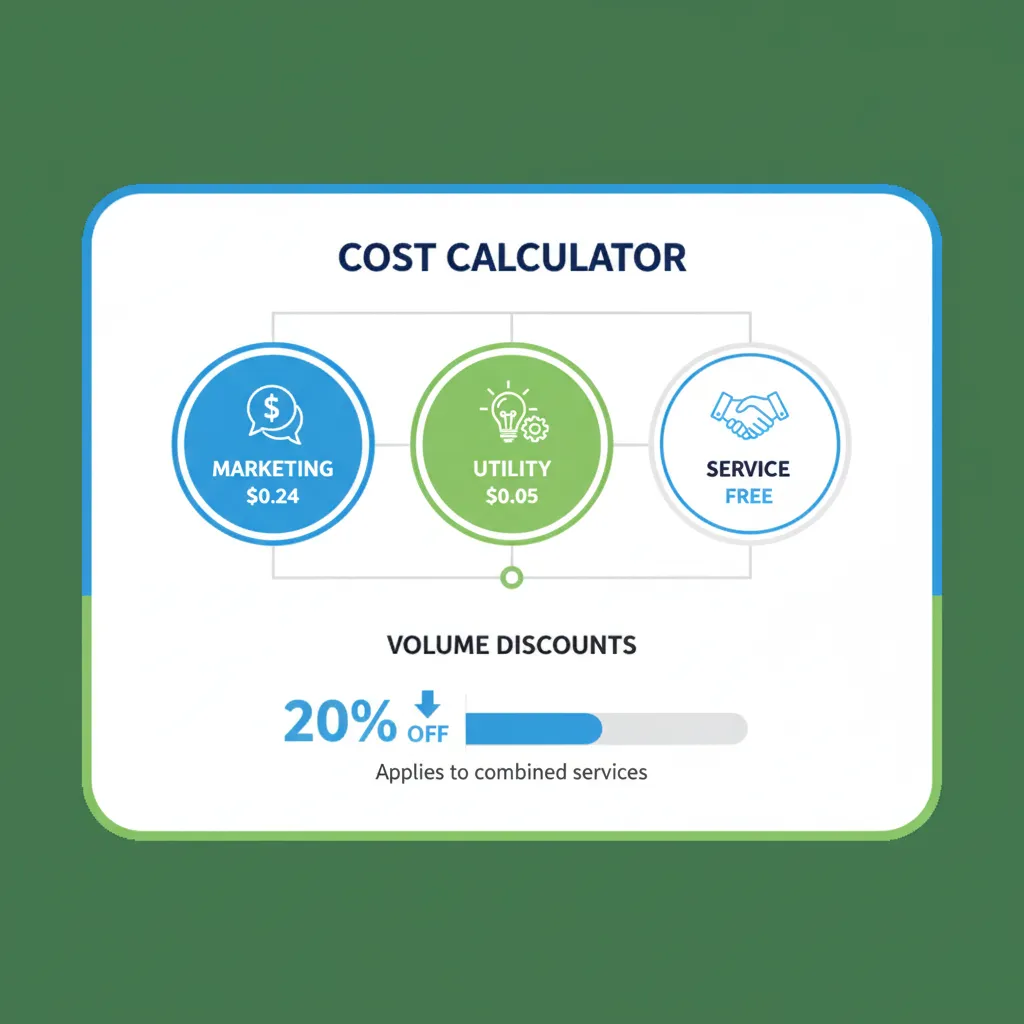
Here's a simple formula to estimate your monthly cost:
Monthly Cost = (Marketing msgs x marketing rate) + (Utility msgs x utility rate) + (Auth msgs x auth rate) + ISV platform fee + (Extra agents x per-agent fee)
Let's walk through three scenarios:
Scenario 1: Small Business (Support-Focused)
- 2,000 inbound support conversations/month (free)
- 500 marketing broadcasts/month ($0.024 each for US = $12)
- 200 utility messages/month ($0.02 each = $4)
- 3 team members
ChatDaddy Basic: $119 + $12 + $4 = $135/month
WATI Growth: $49 + $12 + $4 = $65/month
Scenario 2: Growing Business (Sales + Support)
- 5,000 inbound conversations/month (free)
- 10,000 marketing messages/month ($0.024 each = $240)
- 2,000 utility messages/month ($0.02 each = $40)
- 10 team members
ChatDaddy Pro: $299 + $240 + $40 = $579/month
Respond.io Growth: $279 + $100 (extra agents) + $240 + $40 = $659/month
Scenario 3: Enterprise (High-Volume Marketing)
- 20,000 inbound conversations/month (free)
- 100,000 marketing messages/month ($0.024 x 0.85 with 15% discount = $2,040)
- 10,000 utility messages/month ($0.02 x 0.85 = $170)
- 25 team members
ChatDaddy Max: $799 + $2,040 + $170 = $3,009/month
Respond.io Enterprise: $699 + $400 (extra agents) + $2,040 + $170 = $3,309/month
In every scenario, ChatDaddy delivers the lowest total cost — primarily because of up to 15 teammate seats and zero message markup.
Get the Best WhatsApp API Pricing with ChatDaddy
Zero message markup. Up to 15 teammates. Free plan available. Join 23,500+ businesses paying less for more features.
Start Free Today7 Ways to Reduce Your WhatsApp API Costs
1. Maximize Free Service Replies
Every inbound message opens a free 24-hour reply window. Train your team to respond quickly and resolve issues within this window. Use chatbots to send instant automated replies that keep the window open while a human agent follows up.
2. Use Utility Templates Instead of Marketing When Possible
Order confirmations, shipping updates, and appointment reminders qualify as utility templates, which cost 15-60% less than marketing templates. Don't classify transactional messages as marketing — it's more expensive and unnecessary.
3. Segment Your Broadcast Lists
Don't blast your entire contact list with every promotion. Use ChatDaddy's segmentation tools to target only relevant contacts. Sending 2,000 targeted messages to interested contacts converts better than 10,000 untargeted messages — and costs 80% less.
4. Negotiate Volume Discounts
If you're sending 50,000+ templates per month, talk to your ISV partner about volume pricing. ChatDaddy's team can help you access Meta's volume discount tiers, potentially saving 10-20% on messaging costs.
5. Choose an ISV partner with No Per-Agent Fees
This is the single biggest cost differentiator. A 20-person team on WATI pays an extra $180/month just for agent seats. On ChatDaddy, that's $0. Over a year, that's $2,160 saved.
6. Automate with Chatbots
Every conversation handled by a chatbot is a conversation your human agents don't need to manage. If your chatbot resolves 40% of inbound queries, you need fewer agents and process more conversations without increasing costs.
7. Optimize Template Approval Rates
Rejected templates waste time and delay campaigns. Follow Meta's template guidelines closely: avoid overly promotional language, include clear opt-out options, and use variables for personalization. ChatDaddy's template review tool helps you optimize before submission.
ChatDaddy Pricing Plans: Full Breakdown
Here's the complete feature breakdown for each ChatDaddy plan:
| Feature | Free | Basic ($119/mo) | Pro ($299/mo) | Max ($799/mo) |
|---|---|---|---|---|
| Agent Seats | 1 | 5 | 10 | 15 |
| Contacts | 250 | 1,000 | 10,000 | Unlimited |
| Shared Inbox | Yes | Yes | Yes | Yes |
| Chatbot Builder | Basic | Full | AI-powered | AI-powered + custom |
| Broadcast | Limited | Unlimited | Unlimited | Unlimited + scheduling |
| Automation Flows | 3 | 10 | Unlimited | Unlimited |
| Analytics | Basic | Standard | Advanced | Custom reports |
| Integrations | Zapier | Shopify, Sheets, Zapier | All + API access | All + custom |
| Support | Community | Email + chat | Priority | Dedicated manager |
| Meta ISV Partner | Yes | Yes | Yes | Yes |
| Message Markup | None | None | None | None |
For most businesses, the Basic plan at $119/month offers the best value: 5 teammates, full chatbot builder, unlimited broadcast, and no message markup. The WhatsApp Business API messaging charges from Meta are the same regardless of which plan you choose — ChatDaddy never marks up Meta's rates.
Related Articles
- WhatsApp Business API Guide
- Best WhatsApp API Provider
- WhatsApp Business API Pricing
- WhatsApp Coexistence Explained
- WhatsApp CRM: Complete Guide
Frequently Asked Questions
How much does WhatsApp API cost per message in 2026?
WhatsApp API costs vary by message type and country. In the US, marketing templates cost $0.024/message, utility templates $0.020/message, and authentication templates $0.0135/message. Service replies within 24 hours are completely free. Rates are lower in developing markets like India ($0.0099 for marketing) and vary by country.
Is WhatsApp Business API free?
The WhatsApp Business API itself has no upfront cost to access, but you pay per outbound template message sent. Service replies within 24 hours are free. You also need a ISV Technology Partner like ChatDaddy, which charges a platform fee. ChatDaddy offers a free plan so you can get started with no cost at all.
Which WhatsApp API provider is cheapest?
ChatDaddy is the most cost-effective WhatsApp API provider for most businesses. It's the only provider offering a free plan, charges $119/month for up to 15 teammates (vs $49-113/month for competitors with agent limits), and adds zero markup to Meta's messaging rates. For a 10-person team, ChatDaddy saves $90-180/month compared to WATI, respond.io, or 360dialog.
Are WhatsApp service replies really free in 2026?
Yes. Starting in 2026, Meta made all service conversation replies within the 24-hour window completely free. This means responding to customer-initiated messages costs nothing in API fees. Only outbound marketing, utility, and authentication template messages incur charges.
What are WhatsApp API volume discounts?
Businesses sending over 10,000 template messages per month can access volume discounts of 5-20%. The discount tiers are: 10K-50K messages (5% off), 50K-100K (10% off), 100K-500K (15% off), and 500K+ (20% off). These discounts apply to Meta's base rates and must be negotiated through your ISV partner.
Does ChatDaddy mark up WhatsApp API messaging rates?
No. ChatDaddy passes through Meta's messaging rates at cost with zero markup. You pay only the Meta rate for each template message sent, plus your ChatDaddy platform subscription fee. Some competitors like 360dialog add $0.005/message on top of Meta's rates.
How do I reduce my WhatsApp API costs?
The most effective ways to reduce costs are: maximize free service replies by responding within 24 hours, segment broadcast lists to avoid sending to uninterested contacts, use utility templates instead of marketing templates for transactional messages, choose an ISV partner with teammate limits vary by plan like ChatDaddy, and automate routine conversations with chatbots to reduce agent workload.
What's the difference between WhatsApp Business App and WhatsApp Business API pricing?
The WhatsApp Business App is free but limited to one device, no automation, and no team access. The WhatsApp Business API charges per outbound template message but provides multi-agent access, chatbots, broadcasts, and integrations through an ISV partner. For businesses handling more than 50 conversations daily or needing team collaboration, the API is necessary despite the per-message cost.