WhatsApp Marketing Strategy 2026: The Definitive Playbook for Business Growth
By ChatDaddy Team
March 28, 2026
Last updated: March 28, 2026
12 min read
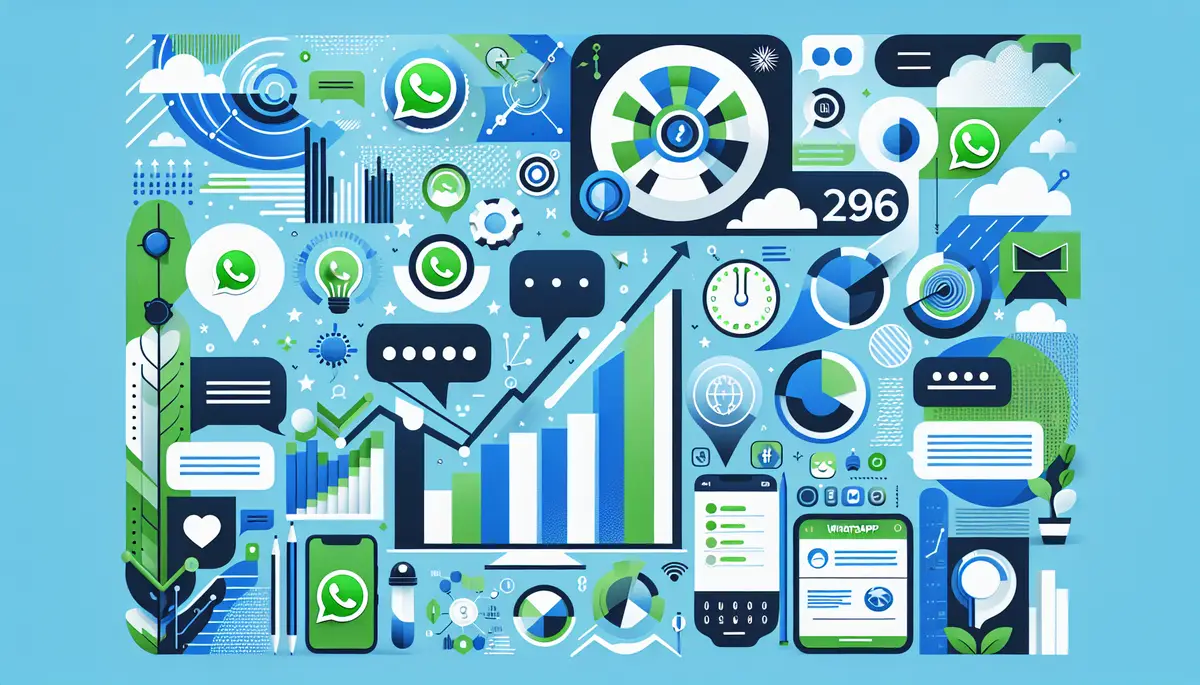
WhatsApp is no longer a messaging app — it's the world's most powerful marketing channel. With 3 billion active users across 180+ countries and open rates pushing 95-98%, no other channel comes close. Email newsletters average 20%. SMS averages 85% but lacks interactivity. WhatsApp delivers both reach and engagement in a single, personal thread your customers check dozens of times a day.
But here's the problem: most businesses treating WhatsApp as just another broadcast channel are leaving the majority of its value untapped. In 2026, winning brands are using WhatsApp as a full-funnel marketing engine — acquiring customers through Click-to-WhatsApp ads, nurturing them with intelligent drip sequences, converting them with conversational commerce, and retaining them with loyalty programs and personalised re-engagement. This playbook, built around the capabilities of ChatDaddy — an official Meta ISV Partner trusted by 23,500+ businesses — gives you the complete strategy.
Why WhatsApp Marketing Is Unmissable in 2026
WhatsApp marketing in 2026 delivers 95-98% open rates, 45-60% click-through rates on well-targeted campaigns, and conversion rates 3-5x higher than email. With 3 billion users globally and Meta's continued investment in business messaging features, WhatsApp is now the highest-ROI digital marketing channel available to any business, regardless of size or geography.
The numbers tell a story that no CMO can ignore. Here's how WhatsApp stacks up against every other channel available in 2026:
| Channel |
Avg. Open Rate |
Avg. CTR |
Avg. Conversion Rate |
Cost per Lead |
| WhatsApp | 95-98% | 45-60% | 8-15% | Very Low |
| Email | 18-22% | 2-4% | 1-3% | Low |
| SMS | 85-90% | 6-8% | 2-4% | Medium |
| Facebook Ads | N/A | 0.9-1.5% | 1-2% | High |
| Push Notifications | 5-15% | 1-4% | 0.5-2% | Low |
Three structural shifts in 2026 have cemented WhatsApp as the dominant marketing channel:
- Meta's continued API investment — WhatsApp Business API capabilities have expanded significantly, with new interactive message types, catalog sharing, in-chat payments (in select markets), and tighter Click-to-WhatsApp ad integration making it easier to run full-funnel campaigns.
- Consumer preference shift — post-pandemic consumer behaviour permanently moved toward messaging apps over phone calls and email. 73% of consumers globally now prefer messaging a business over calling (DemandSage, 2025).
- Rising ad costs everywhere else — Meta and Google ad CPMs continue to rise. WhatsApp marketing, once a contact is opted in, has near-zero ongoing distribution cost — a message to 50,000 contacts costs the same to send as a message to 500.
"The brands that will dominate the next decade won't own the most followers on social media. They'll own the deepest WhatsApp contact lists — and know exactly how to activate them." — ChatDaddy Growth Team
Building Your WhatsApp Marketing Strategy
A WhatsApp marketing strategy requires three foundations before any tactic is deployed: clear business goals (acquisition, retention, or revenue), a well-defined target audience with segmentation logic, and a compliant opt-in system that builds a permission-based contact list. Without these, campaigns underperform and risk account suspension.
Step 1 — Define Your Goals
Every WhatsApp marketing tactic maps to a stage of the customer lifecycle. Before choosing tactics, define which stage you're prioritising:
- Acquisition — generate new leads and first-time buyers via CTWA ads, QR codes, and website widgets
- Conversion — move leads to purchase via conversational commerce, product catalogs, and timely follow-up sequences
- Retention — keep existing customers engaged via loyalty programs, exclusive offers, and personalised content
- Reactivation — win back dormant customers with re-engagement campaigns and cart recovery
Most businesses should run tactics across all four stages simultaneously — but if you're starting out, prioritise conversion first. A fast, responsive WhatsApp chatbot that converts existing leads is the quickest path to ROI.
Step 2 — Know Your Audience
WhatsApp marketing is not broadcast-only. The most effective strategies use segmentation to send the right message to the right person at the right time. Build your audience segments around:
- Purchase history — first-time buyers vs. repeat customers vs. high-value customers (VIP tier)
- Product interest — tagged during lead capture (e.g., "interested in Plan A" vs. "interested in Plan B")
- Engagement level — active engagers vs. cold contacts who haven't replied in 60+ days
- Geography — especially important for businesses with regional pricing, promotions, or physical locations
- Language — multilingual markets require language-specific message flows for effective personalisation
Step 3 — Build a Compliant Opt-In System
This is non-negotiable. WhatsApp's policies and regional privacy laws (GDPR, PDPA, DPDP Act, LGPD, CCPA) all require explicit opt-in consent before sending marketing messages. Violate this and Meta will restrict or disable your number. Build opt-in touchpoints across every customer interaction:
- Website widget — "Chat with us on WhatsApp" floating button that triggers opt-in consent
- Checkout opt-in — checkbox at purchase: "I agree to receive order updates and promotions via WhatsApp"
- CTWA landing — when a customer messages you from a Click-to-WhatsApp ad, they are automatically opted in (this is a key advantage)
- QR code at point of sale — physical stores, events, receipts, and packaging all become opt-in touchpoints
- Existing customer re-permission — if migrating an existing contact list, send a one-time opt-in confirmation message before running any campaigns
Core Tactic 1 — Broadcast Campaigns
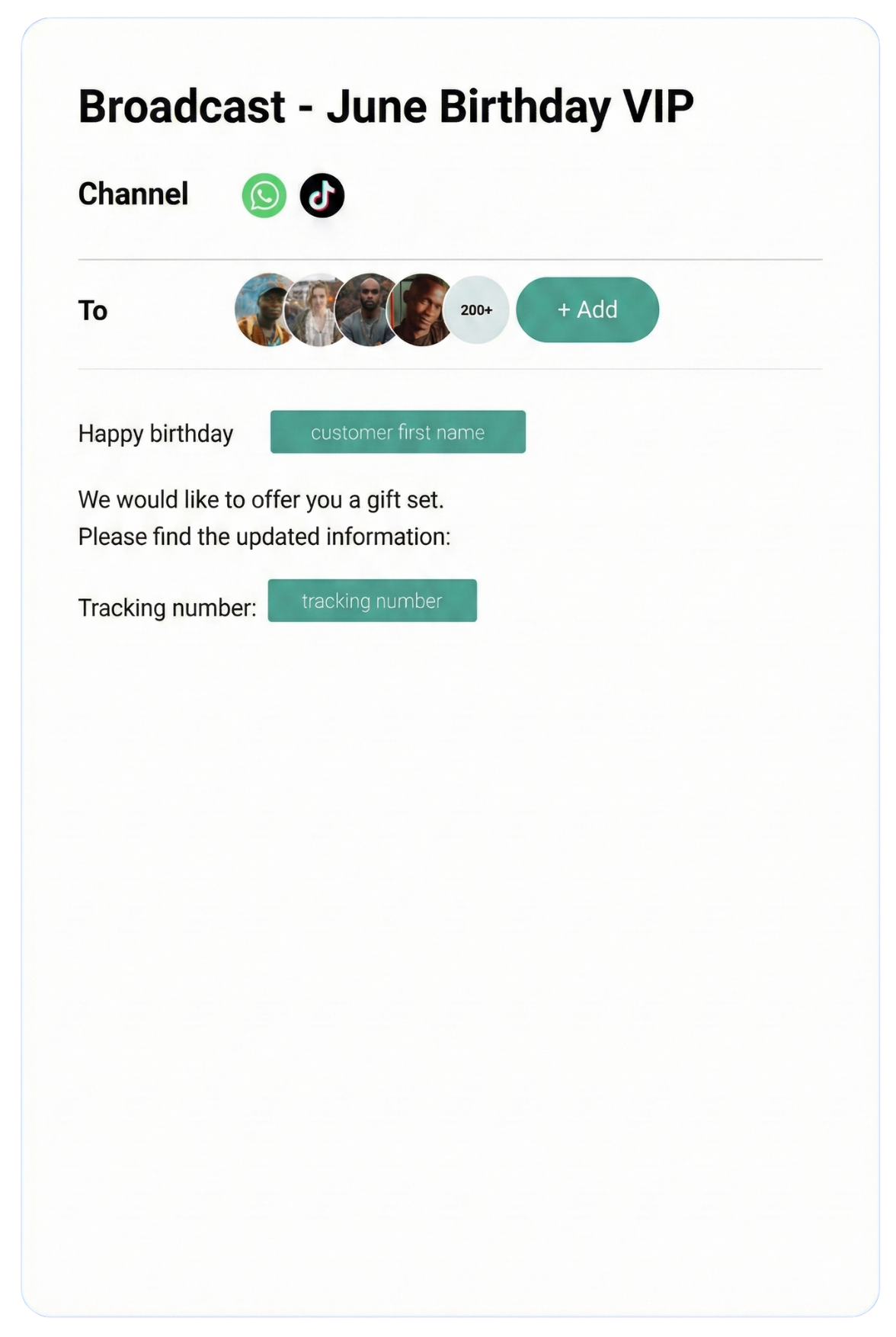
WhatsApp broadcast campaigns send templated messages to large opt-in contact lists and achieve 95-98% open rates. Effective campaigns use personalisation tokens (first name, product name, purchase date), send at high-engagement times (10-11am or 7-9pm local time), and include a single clear call-to-action. ChatDaddy's broadcast tool delivers up to 20x the industry standard sending speed.
Broadcast messaging is the most widely used WhatsApp marketing tactic — and when done right, it is extraordinarily effective. The key difference between a broadcast that converts and one that gets ignored comes down to four variables:
1. Segmentation
Never broadcast to your entire list with a single generic message. A promotional offer that works for a first-time buyer is irrelevant to a VIP who bought three times last month. In ChatDaddy, you can filter your contact list by any combination of tags, custom fields, last purchase date, or engagement status before firing a broadcast. The more targeted the audience, the higher the conversion rate.
2. Template Quality
All marketing messages sent via the WhatsApp Business API must use pre-approved message templates. A strong template has: a personalised opening (using the contact's first name), a clear value proposition in the first 2 lines (the "preview" text determines whether someone opens), a single CTA (not three competing options), and an opt-out phrase ("Reply STOP to unsubscribe"). Templates without all four elements consistently underperform.
3. Timing
WhatsApp is a mobile-first channel. Peak engagement windows are 10-11am (morning commute and post-arrival coffee break) and 7-9pm (evening wind-down). Avoid sending between 12am-8am in your audience's timezone — Meta monitors spam reports per number and unsolicited late-night messages generate disproportionately high complaint rates.
4. Frequency
More is not better on WhatsApp. Unlike email where daily sends are tolerated, WhatsApp users have a much lower spam threshold. For promotional broadcasts, 2-4 times per month is the safe zone for most audiences. Transactional and service messages (order confirmations, shipping updates, appointment reminders) can be sent as frequently as needed — they are expected and welcomed.
Send Broadcasts to Unlimited Contacts — Starting Free
ChatDaddy's broadcast tool delivers messages at 20x industry speed with unlimited contacts on paid plans. Join 23,500+ businesses already running high-converting WhatsApp campaigns.
Start Free — No Credit Card Needed
Core Tactic 2 — Conversational Commerce
Conversational commerce uses WhatsApp chatbots to guide customers through product discovery, selection, and purchase entirely within the chat interface — no website redirect required. Businesses using conversational commerce report 2-3x higher conversion rates compared to directing customers to a website, because the buying decision happens in a trusted, familiar environment.
Conversational commerce is the single biggest shift in how online businesses sell in 2026. Instead of sending customers to a landing page and hoping they navigate it correctly, you bring the storefront into the conversation. The flow looks like this:
- Customer initiates — via a CTWA ad, a QR code scan, or a broadcast with a reply CTA
- Chatbot qualifies — asks 2-3 questions to understand intent ("Are you looking for X, Y, or Z?"), displays interactive buttons (no typing required)
- Chatbot presents options — sends product catalog cards, images, prices, and availability directly in chat
- Customer selects — taps their choice; chatbot confirms order details
- Handoff or close — the chatbot either completes the transaction (where in-chat payments are available) or routes to a sales agent for assisted close on complex or high-value orders
For B2B businesses, conversational commerce works differently but equally effectively: instead of product selection, the chatbot qualifies leads, books demos, delivers proposals, and hands off to a sales rep at the right moment — reducing the SDR workload by 60-80% on low-intent leads.
Core Tactic 3 — Click-to-WhatsApp Ads
Click-to-WhatsApp (CTWA) ads are Facebook and Instagram ads where the CTA button opens a WhatsApp conversation instead of sending traffic to a website. CTWA ads consistently outperform website traffic ads because the user is immediately in a conversation — warmer, faster to convert, and automatically opted in for future WhatsApp marketing messages.
Click-to-WhatsApp ads are the fastest growing ad format on Meta's platforms in 2026 — and for good reason. The economics are compelling:
- Zero friction — no landing page to load, no form to fill. One tap and the customer is in a live chat with your business.
- Automatic opt-in — when someone messages you from a CTWA ad, they are, by Meta's terms, opting in to receive messages. This instantly adds them to your contactable list.
- Higher intent signals — a user who actively starts a WhatsApp conversation is significantly more qualified than someone who clicked to a landing page. CPL (cost per lead) on CTWA campaigns typically runs 30-50% lower than equivalent website traffic campaigns.
- Immediate follow-up — a well-configured chatbot responds to the first message within seconds, catching the customer at peak intent.
CTWA Campaign Setup: The High-Converting Flow
The difference between a CTWA campaign that converts at 12% and one that converts at 3% is almost entirely in the first 60 seconds of the conversation. When a customer sends their opening message, they should immediately receive:
- A personalised greeting that references the ad they clicked (use UTM parameters to pass this context to ChatDaddy)
- A clear next step presented as 2-3 simple button options — not an open text prompt
- Social proof within the first two messages ("Over 23,500 businesses trust us")
- A path to human agent for anyone who wants to speak to a person immediately
ChatDaddy integrates directly with Meta Business Suite, meaning CTWA leads flow automatically into your shared inbox with UTM data, ad source, and contact details pre-populated — no manual entry required.
Core Tactic 4 — Loyalty Programs on WhatsApp
WhatsApp loyalty programs deliver point balances, tier updates, exclusive member offers, and birthday rewards directly to customers' phones via chat — achieving 4-6x higher redemption rates than email-based loyalty programs. The key advantage is that customers don't need to download a separate app; everything lives in WhatsApp, which they already check daily.
App-based loyalty programs have a fatal flaw: app download rates. Even enthusiastic customers balk at installing another app. WhatsApp-based loyalty sidesteps this entirely. Here's how a complete WhatsApp loyalty program operates:
- Enrolment — customer sends "JOIN" to your WhatsApp number or scans a QR code at checkout. Chatbot collects name, email (optional), and confirms enrolment with a welcome message showing current points balance (0).
- Points notification — after each purchase, an automated message sends: "Hi [Name], you just earned 45 points! Your new balance is 320 points. Redeem at [link]."
- Tier announcements — when a customer crosses a tier threshold (e.g., Silver to Gold), a celebratory message goes out with their new benefits listed.
- Exclusive member broadcasts — loyalty members receive early access to sales, member-only discounts, and personalised birthday offers sent directly to WhatsApp.
- Redemption prompts — if a member has unclaimed points approaching expiry, an automated re-engagement message prompts redemption before the deadline.
The redemption rate difference between email-based and WhatsApp-based loyalty programs is stark. Where email loyalty emails achieve 5-8% open rates, WhatsApp loyalty messages land at 95%+ open rates — turning every communication into a genuine opportunity to drive a repeat purchase.
Core Tactic 5 — Abandoned Cart Recovery
WhatsApp abandoned cart messages recover 25-35% of abandoned carts when sent within 1 hour of abandonment — compared to just 5-10% recovery via email. The 3-message sequence (immediate reminder, 24-hour follow-up with social proof, and 48-hour offer with small incentive) consistently outperforms single-message approaches across all industries.
Cart abandonment costs e-commerce businesses $18 billion annually (Baymard Institute, 2025). The average cart abandonment rate is 70%. WhatsApp recovery sequences attack this problem with a timing and personalization advantage that email simply cannot match.
The 3-Message Recovery Sequence
Message 1 (within 60 minutes of abandonment):
"Hi [Name], you left something behind! Your [Product Name] is still waiting in your cart. Complete your order here: [link]. Need help? Just reply."
Message 2 (24 hours after abandonment):
"Hi [Name], we noticed you were interested in [Product Name]. Other customers love it — [X reviews, Y stars]. Is there anything stopping you? Reply and we'll help: [link]"
Message 3 (48 hours after abandonment, with soft incentive):
"Hi [Name], last reminder about your cart. We'd love to help you complete your order. Here's 10% off if you order in the next 24 hours: [code]. [link]"
ChatDaddy integrates with Shopify and WooCommerce to trigger this sequence automatically when a customer who has opted in to WhatsApp communications abandons their cart. No manual intervention required. The sequence stops the moment the customer completes a purchase.
Recover 25-35% of Abandoned Carts Automatically
Connect your Shopify or WooCommerce store to ChatDaddy and launch your abandoned cart recovery sequence today. Free plan available — no credit card needed.
Start Recovering Revenue
Core Tactic 6 — Re-Engagement Campaigns
WhatsApp re-engagement campaigns target contacts who haven't interacted in 60-90 days with personalised messages that reference their previous behaviour (last purchase, last inquiry, or last interaction). Effective re-engagement campaigns recover 15-25% of dormant contacts — a significant revenue opportunity given that acquiring a new customer costs 5x more than retaining an existing one.
Every contact list has a segment of dormant users who opted in, engaged once or twice, and then went quiet. These are warm contacts — they know your brand, they consented to hear from you. With the right message, they can be reactivated at a fraction of the cost of acquiring new customers.
Re-Engagement Sequence Framework
- Segment identification — tag contacts who haven't replied or clicked in 60+ days as "dormant" in ChatDaddy. Do this monthly so the segment stays current.
- Personalised opening — reference something specific from their last interaction: "Hi [Name], it's been a while since you enquired about [Product/Service]. A lot has changed — we'd love to catch you up."
- Value hook — give them a reason to re-engage: new product line, a limited-time offer, exclusive content, or an upgrade path relevant to their profile.
- Easy response path — use quick reply buttons ("Tell me more" / "What's new?" / "I'm not interested") to make engagement frictionless. Contacts who click "I'm not interested" should be auto-unsubscribed — this protects your spam score.
- Sunset policy — contacts who don't engage with 2-3 re-engagement attempts over 90 days should be archived. Sending to chronically disengaged contacts hurts your WhatsApp sender reputation and risks number flagging.
Measuring Success: KPIs, Open Rates, CTR, and ROI
The primary KPIs for WhatsApp marketing are: message delivery rate (target 98%+), open rate (target 90%+), click-through rate on CTA links (target 30-50% for well-segmented campaigns), reply rate (target 15-25%), conversion rate from conversation to purchase (target 8-15%), and cost per acquisition versus other channels (WhatsApp typically delivers 40-60% lower CPA).
WhatsApp marketing is highly measurable when you have the right tooling. Here are the metrics that matter and what good looks like in 2026:
| KPI |
Definition |
Benchmark (Good) |
Benchmark (Excellent) |
| Delivery Rate | % of messages successfully delivered | 95%+ | 99%+ |
| Open Rate | % of delivered messages read | 75-85% | 90-98% |
| CTR | % who clicked your CTA link | 20-35% | 45-60% |
| Reply Rate | % who replied to the message | 8-15% | 20-30% |
| Conversion Rate | % of conversations resulting in purchase/booking | 5-8% | 12-20% |
| Opt-Out Rate | % who unsubscribed after a broadcast | Under 2% | Under 0.5% |
| First Response Time | Time from customer message to first reply | Under 5 min | Under 30 sec (chatbot) |
| CSAT Score | Customer satisfaction from post-chat survey | 4.0/5+ | 4.5/5+ |
Calculating ROI on WhatsApp Marketing
ROI calculation for WhatsApp marketing is straightforward when you track attribution properly. The formula:
WhatsApp Marketing ROI = [(Revenue attributed to WhatsApp campaigns) - (Total WhatsApp costs)] / (Total WhatsApp costs) x 100
Total WhatsApp costs include: platform subscription (e.g., ChatDaddy plan), WhatsApp Business API conversation fees (Meta charges per conversation, with free tiers for user-initiated conversations), and staff time for managing conversations the chatbot cannot handle. For a business on ChatDaddy's Basic plan ($119/month) running 4 broadcasts per month to 5,000 contacts, typical all-in monthly cost is $150-250. A 2% conversion rate on broadcast campaigns at an average order value of $80 generates $8,000 in attributed revenue — a 3,200-5,300% ROI.
A complete WhatsApp marketing stack in 2026 requires five components: a WhatsApp Business API platform (e.g., ChatDaddy), a contact management and segmentation system, a chatbot builder for automating conversations, an analytics dashboard for tracking KPIs, and integrations with your existing e-commerce or CRM tools.
You do not need a large technology budget to build a high-performing WhatsApp marketing stack. Here are the core tools by category:
1. WhatsApp Business API Platform
This is the foundation. The API gives you access to broadcast messaging, chatbots, shared inbox, templates, and analytics. ChatDaddy is the leading option for SMBs and growing mid-market businesses, offering all of these capabilities with transparent pricing starting at $0. Alternatives include WATI (more limited, no free plan), respond.io (enterprise focus, higher price), and Twilio (developer-first, requires custom build).
2. E-Commerce Integration
For product-based businesses: Shopify, WooCommerce, or WooCommerce + ChatDaddy's native connectors. These integrations power abandoned cart recovery, order confirmation, and shipping update automations with zero custom development.
3. CRM or Contact Database
HubSpot, Salesforce, Pipedrive, or even Google Sheets. ChatDaddy integrates with all major CRMs and Zapier, so contact records stay in sync — purchase history, tag updates, and conversation notes are reflected across both systems in real-time.
4. Meta Business Suite
Essential for CTWA ad creation and management. Use it to set up UTM parameters that pass ad source context into ChatDaddy, enabling you to attribute conversions back to specific campaigns.
5. Analytics and Reporting
ChatDaddy's built-in analytics covers message delivery, open rates, response times, and agent performance. For revenue attribution and cross-channel ROI, connect to Google Analytics 4 via the Measurement Protocol or use a dedicated attribution tool.
ChatDaddy Features That Drive Results
ChatDaddy is a Meta ISV Partner (not a BSP — this distinction means 0% markup on WhatsApp API conversation costs, saving businesses 15-40% on messaging fees). Key features include: unlimited contacts on all paid plans, 20x broadcast speed, AI-powered chatbot, shared team inbox, CTWA ad integration, Shopify/WooCommerce connectors, and coexistence (use ChatDaddy API and the free WhatsApp Business App on the same number simultaneously).
ChatDaddy is built specifically for businesses that want maximum WhatsApp marketing ROI without enterprise pricing or enterprise complexity. Here's what makes it different from every other platform:
Meta ISV Partner — 0% API Markup
This is the most financially significant feature on this list. ChatDaddy is a Meta ISV (Independent Software Vendor) Partner — NOT a BSP (Business Solution Provider). This distinction matters because BSPs are allowed to add a markup to Meta's WhatsApp API conversation fees. ChatDaddy passes Meta's rates through at 0% markup. For businesses sending hundreds of thousands of messages monthly, this saves 15-40% on messaging costs versus BSP-based competitors.
Unlimited Contacts
Most WhatsApp platforms charge by contact — $49/month for 1,000 contacts, $99/month for 5,000, and so on. ChatDaddy's paid plans include unlimited contacts. Whether you have 1,000 or 500,000 opted-in contacts, your platform fee is the same. This fundamentally changes the economics of list building — you are never penalised for growing your audience.
20x Broadcast Speed
ChatDaddy's infrastructure delivers broadcasts at up to 20x the speed of standard API implementations. For time-sensitive campaigns (flash sales, limited-time offers, breaking product launches), this means your entire contact list receives the message in minutes rather than hours — before the deal expires and before competitors can react.
Coexistence
One of ChatDaddy's most practical features: you can use the ChatDaddy API and the standard free WhatsApp Business App on the same phone number simultaneously. This means your team manages bulk automation and broadcasts through ChatDaddy while continuing to have natural, personal conversations through the regular app — with no disruption, no number migration, and no loss of existing chat history.
AI-Powered Chatbot
ChatDaddy's no-code chatbot builder handles lead qualification, FAQ responses, appointment booking, order status inquiries, and cart recovery flows — without a single line of code. The AI layer understands natural language, meaning customers can type in their own words rather than selecting from rigid menus. On Pro and Max plans, the AI chatbot is available 24/7 and handles the majority of inbound volume autonomously.
Shared Team Inbox with Assignment
Multiple team members manage the same WhatsApp number from a unified dashboard. Conversations are assigned to agents, internal notes are visible to the whole team, and managers can monitor response times and SLA compliance in real-time. This transforms WhatsApp from a personal phone app into an enterprise-grade customer communication platform.
Pricing
ChatDaddy pricing: Free ($0, 1 teammate), Basic ($119/month, 5 teammates, unlimited contacts), Pro ($299/month, 10 teammates, unlimited contacts, AI chatbot), Max ($799/month, 15 teammates, unlimited contacts, priority support, dedicated account manager). All paid plans include unlimited contacts — you are never charged per contact regardless of list size.
ChatDaddy is one of the very few WhatsApp marketing platforms that does not charge per contact. Here is the full pricing breakdown:
| Plan |
Price (USD/month) |
Teammates |
Contacts |
Key Features |
| Free | $0 | 1 | Limited | Shared inbox, basic chatbot, broadcasts |
| Basic | $119 | 5 | Unlimited | Full chatbot builder, broadcast campaigns, Shopify integration, analytics |
| Pro | $299 | 10 | Unlimited | AI chatbot, advanced automation, API access, multi-channel inbox, priority onboarding |
| Max | $799 | 15 | Unlimited | All Pro features + dedicated account manager, custom integrations, SLA support, advanced reporting |
Important notes on pricing:
- All plans include the coexistence feature — use ChatDaddy API and WhatsApp Business App on the same number at no extra cost
- WhatsApp API conversation fees from Meta are passed through at 0% markup on all plans — you pay exactly what Meta charges, nothing more
- Teammate limits refer to concurrent users, not seats — scale up or down as your team changes
- Annual plans are available with significant discounts — contact the ChatDaddy team for enterprise or annual pricing
Start Your WhatsApp Marketing Strategy Today
23,500+ businesses trust ChatDaddy to run their WhatsApp marketing. Free plan available — unlimited contacts from day one on paid plans. Meta ISV Partner with 0% API markup.
Get Started Free
Common Mistakes to Avoid
The five most common WhatsApp marketing mistakes in 2026 are: broadcasting without explicit opt-in consent (risks number ban), sending too frequently (drives opt-outs and spam reports), using a generic message to the entire list without segmentation (low conversion, high opt-out), ignoring reply conversations after a broadcast (damages trust), and not measuring attribution properly (leads to undervaluing the channel).
Mistake 1 — Importing Phone Numbers Without Opt-In
This is the fastest way to get your WhatsApp Business account permanently banned. You cannot purchase a list of phone numbers and blast them on WhatsApp. Every contact on your broadcast list must have explicitly consented to receive messages from your business on WhatsApp. Meta's abuse detection is sophisticated — high undelivery rates and spam reports trigger automatic reviews. There are no warnings before a ban, and bans are extremely difficult to reverse.
Mistake 2 — Over-Broadcasting
Businesses that send promotional WhatsApp messages more than once a week consistently see opt-out rates spike above 5%. Once opt-out rates exceed Meta's threshold, your messaging quality score degrades — which limits your ability to send broadcasts even to contacts who want to hear from you. Treat your WhatsApp contact list as a premium asset. Protect it with a strict broadcast frequency policy.
Mistake 3 — Sending Without Personalisation
"Hi Customer, we have a great offer!" is not WhatsApp marketing. It's spam that happens to come through WhatsApp. Every broadcast should use at least the recipient's first name, and high-performing campaigns also personalise the product mentioned, the offer amount (based on purchase history), and the call-to-action. ChatDaddy's broadcast builder supports dynamic variable insertion for all of these fields.
Mistake 4 — Ignoring Replies After Broadcasts
When you send a broadcast to 10,000 contacts and 500 of them reply, those 500 are the highest-intent customers in your database. Businesses that ignore these replies — or respond hours later — squander the most valuable moment in the marketing funnel. Set up triage automations in ChatDaddy: replies with keywords like "buy", "interested", or "price" are automatically tagged and assigned to a sales agent for immediate follow-up.
Mistake 5 — No Attribution Tracking
Businesses that don't track revenue back to specific WhatsApp campaigns consistently underinvest in the channel because they can't prove its ROI to stakeholders. Use UTM parameters on all CTA links in broadcasts, configure ChatDaddy's Google Analytics integration, and report on WhatsApp-attributed revenue monthly alongside other channel performance. The data will almost always make WhatsApp look like your highest-ROI channel — which makes the case for continued investment obvious.
Mistake 6 — Using a Third-Party Unofficial API
Some businesses use unofficial WhatsApp automation tools (based on web scraping or unofficial reverse-engineered APIs) to avoid paying for the official API. This violates WhatsApp's Terms of Service and results in account bans without recovery options. Always use the official WhatsApp Business API through a Meta-authorised partner like ChatDaddy.
Frequently Asked Questions
What is WhatsApp marketing and how does it work?
WhatsApp marketing uses the WhatsApp Business API to send promotional messages, product updates, and service communications to opted-in customers. Businesses connect to the API through a platform like ChatDaddy, build a contact list with explicit opt-in consent, create Meta-approved message templates, and send targeted broadcasts. Customers can reply to start two-way conversations handled by chatbots or human agents. Unlike social media marketing, WhatsApp marketing lands directly in a private chat window — achieving 95-98% open rates versus 18-22% for email.
Is WhatsApp marketing legal?
Yes, WhatsApp marketing is legal when conducted through the official WhatsApp Business API with explicit opt-in consent from recipients. Using unofficial tools or sending to numbers that have not opted in violates both WhatsApp's Terms of Service and data protection laws including GDPR, PDPA, DPDP Act, and CCPA. Using a Meta-authorised ISV partner like ChatDaddy ensures your campaigns are compliant at the platform level; obtaining proper opt-in consent before messaging is your responsibility as the business owner.
What is the difference between a Meta ISV Partner and a BSP?
An ISV (Independent Software Vendor) partner builds software that connects to Meta's WhatsApp Business API. A BSP (Business Solution Provider) resells Meta's messaging infrastructure. The key difference for businesses: BSPs are permitted to markup Meta's API conversation fees — and many do, adding 15-40% on top. ISV partners like ChatDaddy do not resell the API infrastructure; they pass Meta's conversation fees through at 0% markup. This can represent significant savings for high-volume businesses. ChatDaddy is a Meta ISV Partner, not a BSP.
How many contacts can I have on ChatDaddy?
All ChatDaddy paid plans — Basic ($119/month), Pro ($299/month), and Max ($799/month) — include unlimited contacts. You are never charged per contact regardless of how large your opted-in list grows. The Free plan has limited contacts. This unlimited contacts model is a significant advantage over competitors like WATI, respond.io, and Trengo, which all charge on a per-contact or per-contact-tier basis.
What open rates can I expect from WhatsApp marketing campaigns?
Well-executed WhatsApp broadcast campaigns to an engaged, properly segmented opt-in list consistently achieve 90-98% open rates. Poor segmentation, low message quality, or high frequency can push open rates down to 60-70%. The benchmark for conversion from open to click is 30-50% on high-performing campaigns — compared to 2-4% for email. First-time campaigns to a fresh list typically perform at the lower end of these ranges and improve as you learn which message types resonate with your specific audience.
What is coexistence and why does it matter?
Coexistence is a ChatDaddy feature that lets you use the ChatDaddy API platform and the standard free WhatsApp Business App on the same phone number at the same time. This matters because most businesses transitioning to a WhatsApp CRM worry about losing their existing personal chat history and natural two-way conversations. With coexistence, you do not need to migrate or change your existing number — automated broadcasts and chatbot flows run through ChatDaddy while your team continues using the regular app for personal conversations. This is a ChatDaddy exclusive feature not available on most competing platforms.
How do Click-to-WhatsApp ads differ from regular Facebook ads?
Regular Facebook or Instagram ads typically send traffic to a website landing page. Click-to-WhatsApp (CTWA) ads replace the website redirect with a WhatsApp conversation opener — one tap starts a chat with your business. CTWA ads typically deliver 30-50% lower cost per lead, automatically opt in the user for future WhatsApp marketing, and connect to a chatbot that qualifies and converts within minutes of the click. ChatDaddy integrates directly with Meta Business Suite to receive CTWA leads, pass UTM attribution data, and trigger automated follow-up sequences instantly.
Can I use WhatsApp marketing for B2B businesses?
Absolutely. WhatsApp marketing for B2B is one of the fastest-growing use cases in 2026. B2B applications include: CTWA lead capture from LinkedIn-targeted Meta ads, automated lead qualification chatbots that route prospects to the right sales rep, broadcast campaigns announcing product launches or webinars to opted-in leads, post-event follow-up sequences for trade show contacts, and renewal reminder campaigns for subscription or contract-based businesses. WhatsApp's high open rates make it especially effective for time-sensitive B2B communications that would be missed in a crowded email inbox.
ChatDaddy Team
ChatDaddy is a Meta ISV Partner serving 23,500+ businesses across 50+ countries. Our platform gives businesses of every size the tools to turn WhatsApp into their highest-ROI marketing, sales, and support channel — with unlimited contacts, 0% API markup, and enterprise-grade automation at SMB-friendly pricing.
chatdaddy.tech