WhatsApp CRM for Media & Publishing: The Complete Guide in 2026
By ChatDaddy Team
March 28, 2026
Last updated: March 28, 2026
10 min read

The media and publishing industry is in the middle of a distribution crisis. Email newsletters face a 20% average open rate. Social media algorithms throttle organic reach. Push notifications are ignored. Meanwhile, WhatsApp sits at a 95-98% open rate — and your audience already uses it every day. For news publishers, digital magazines, podcast networks, influencers, and content creators, WhatsApp CRM is the distribution channel that actually delivers.
This guide covers everything media businesses need to know about implementing a WhatsApp CRM in 2026: how it works, which features matter for content distribution, real use cases from publishers and creators, and how to monetize your subscriber base through the world's most-read messaging platform. We'll also show you how ChatDaddy, a Meta ISV Partner trusted by 23,500+ businesses, helps media companies build direct, owned audiences that no algorithm can take away.
What Is WhatsApp CRM for Media & Publishing?
A WhatsApp CRM for media and publishing is a platform connected to the official WhatsApp Business API that allows publishers, content creators, and media brands to distribute newsletters, send breaking news alerts, manage subscriber lists, run paid content tiers, and engage audiences directly — all through WhatsApp, at scale.
Traditional CRM software was designed for B2B sales pipelines. A WhatsApp CRM for media takes those same principles — contact management, segmentation, broadcast messaging, automation — and applies them to the specific needs of content businesses: audience growth, subscriber retention, content delivery, and monetization.
The fundamental shift is this: instead of hoping subscribers check their inbox or see your post, you send content directly into their most-checked app. WhatsApp is opened an average of 25 times per day per user. No email service provider comes close.
At its core, a WhatsApp CRM for media connects to the WhatsApp Business API and gives your editorial and marketing teams:
- Broadcast channels — send newsletters, digests, or breaking news to thousands of opted-in subscribers simultaneously
- Subscriber segmentation — tag audiences by interest, geography, subscription tier, or engagement level
- Automation flows — welcome new subscribers, deliver content on schedule, and re-engage dormant readers automatically
- Two-way conversations — let readers reply, vote on polls, submit tips, and interact with your brand directly
- Shared team inbox — manage reader inquiries, tip submissions, and editorial requests across your entire team from one number
The result is an owned, direct distribution channel that bypasses algorithms, email filters, and platform dependency entirely.
Media and publishing businesses need WhatsApp because it delivers 95-98% open rates versus 20% for email, bypasses social media algorithms, creates an owned audience that can't be de-platformed, and reaches the 2 billion+ global users who already prefer WhatsApp for daily communication — including news consumption.
The distribution problem in media is real and worsening. Facebook organic reach for publishers has dropped to under 2-3%. Instagram's algorithm penalises link posts. Twitter/X has fragmented. Email deliverability fights spam filters. Meanwhile, the audience has moved on — they're reading news in messaging apps, not social feeds.
Here's what the data says about WhatsApp versus traditional media distribution channels:
| Channel |
Average Open Rate |
Click-Through Rate |
Algorithm Dependency |
Owned Audience |
| WhatsApp Broadcast | 95-98% | 35-45% | None | Yes |
| Email Newsletter | 18-25% | 2-5% | Low (spam filters) | Yes |
| Facebook Page Post | 2-3% | 0.5-1% | High | No |
| Instagram Feed Post | 3-5% | 0.3-0.8% | High | No |
| Push Notification | 10-15% | 3-5% | Medium | Partial |
| Twitter/X Post | 1-2% | 0.2-0.5% | Very High | No |
Beyond the numbers, WhatsApp offers something uniquely valuable for media: intimacy. When a subscriber receives your content in the same app where they talk to their family and friends, the relationship dynamic changes. You're not another brand interrupting their feed — you're in their personal space, which means they chose to let you in. Engagement, trust, and conversion all follow.
Globally, over 500 million WhatsApp Status views happen daily. In markets like India, Brazil, Southeast Asia, the Middle East, and Europe, WhatsApp is the primary news consumption channel for large demographic segments. For any media business with international ambitions, WhatsApp isn't optional — it's the infrastructure of modern audience building.
"We moved 40% of our newsletter subscribers to WhatsApp in 90 days. Open rates went from 22% to 91%. Revenue from sponsored content in that channel tripled within six months." — Digital news publisher, Southeast Asia
Key Features for Media Businesses
The most important WhatsApp CRM features for media and publishing are: broadcast newsletter distribution with rich media support, breaking news alert automation, subscriber list segmentation by beat or interest, drip content sequences, two-way reader engagement, content monetization tools, and team inbox for editorial operations.
1. Newsletter Distribution via WhatsApp Broadcast
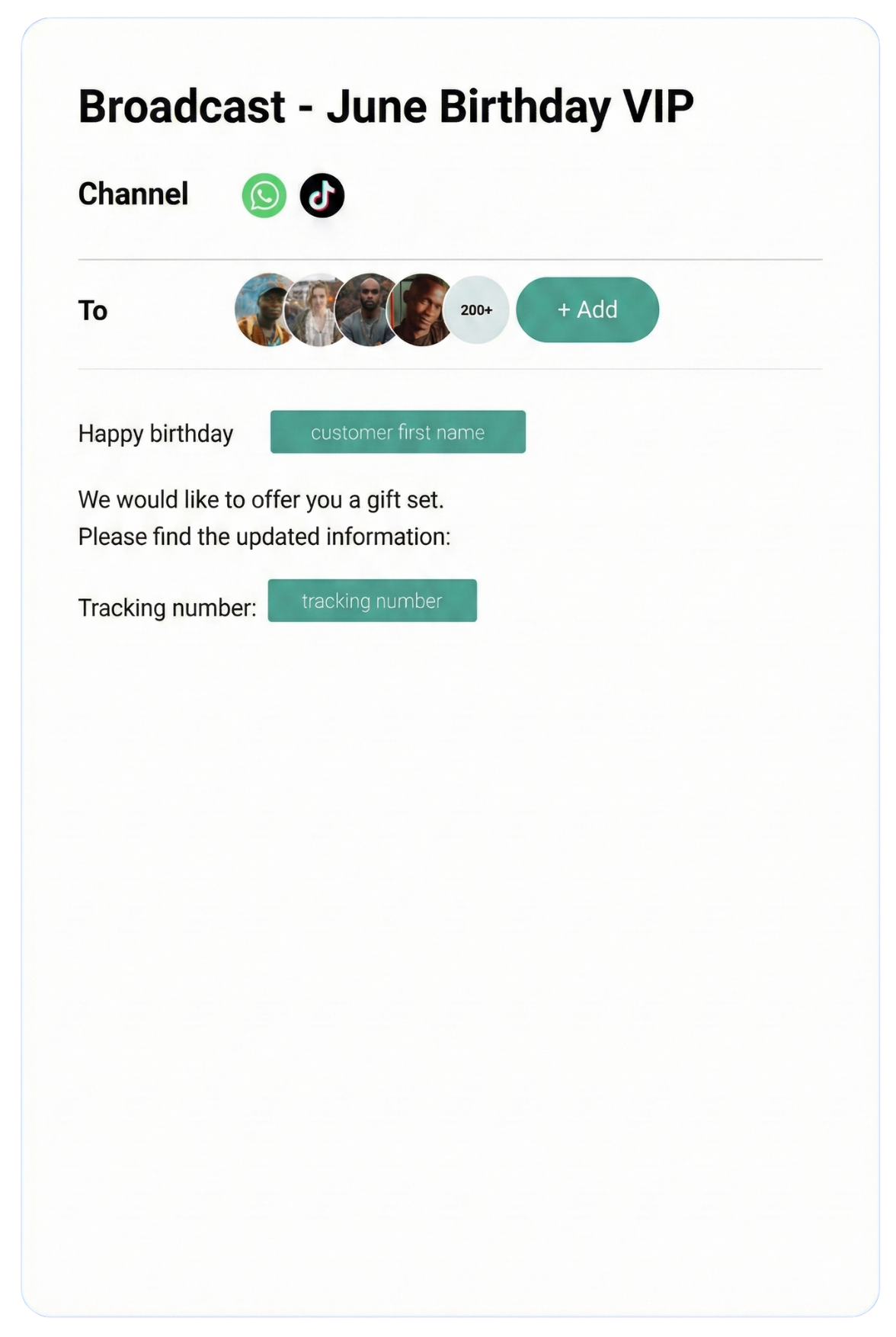
The backbone of any media WhatsApp strategy is reliable, high-volume broadcasting. Unlike the free WhatsApp Business App — which is limited to broadcast lists of 256 contacts — the WhatsApp Business API removes this ceiling entirely. ChatDaddy's broadcast tool lets you send to your entire subscriber list in a single campaign, with:
- Rich media support — send formatted text, images, videos, PDFs, and audio clips in the same message
- Variable personalization — address subscribers by first name, reference their subscription tier, or tailor content by location
- Scheduled sends — queue up morning briefings, weekly digests, or breaking news alerts to go out at precisely the right moment
- 20x broadcast reach — ChatDaddy's infrastructure delivers at scale without throttling
A typical media workflow: your editor finalizes the morning newsletter, clicks "schedule" in ChatDaddy, and 50,000 subscribers receive a richly formatted digest in their WhatsApp at 7:00 AM — alongside a link to the full article, a poll question, and a reply prompt that drives engagement back to the editorial team.
2. Breaking News Alerts
Speed is everything in news publishing. WhatsApp's near-instant delivery (average delivery time under 2 seconds) makes it the ideal channel for breaking news alerts. With ChatDaddy's automation, you can set up:
- Trigger-based alerts — integrate with your CMS or RSS feed so breaking stories automatically trigger a WhatsApp push to relevant subscriber segments
- Beat-specific notifications — politics subscribers get political news; business subscribers get markets updates; sports fans get match alerts
- Urgency formatting — use bold text, emoji indicators, and one-tap CTAs to drive immediate clicks

3. Subscriber Management and Segmentation
Not all subscribers are the same. A WhatsApp CRM gives you the same segmentation power as an email marketing platform — without the deliverability headaches. Tag every contact by:
- Content interests — technology, finance, politics, lifestyle, sports, culture
- Geography — city, region, or country for localised content
- Subscription tier — free, paid, premium, VIP
- Engagement level — active readers, at-risk churn, recently joined
- Acquisition source — social media, referral link, print QR code, event signup
Segmented campaigns consistently outperform blanket broadcasts. When a business news subscriber receives a curated morning digest of financial stories rather than a generic all-topics newsletter, click-through rates increase 2-3x. ChatDaddy's unlimited contact storage (on all paid plans) means no subscriber cap limits your audience growth.
4. Drip Content Sequences
Automated drip sequences work as well for content as they do for sales. Media businesses use them to:
- Onboard new subscribers — a 7-day welcome sequence introducing your best content, explaining how to subscribe to specific topics, and prompting a paid upgrade
- Deliver serialized content — send daily installments of a long-form investigation, a 30-day financial literacy series, or a weekly deep-dive
- Re-engage dormant subscribers — trigger a win-back sequence when a subscriber hasn't opened or clicked in 30 days
- Upsell premium tiers — send a curated "best of paid content" taster to free subscribers, with a one-tap subscribe link
5. Two-Way Reader Engagement
The single biggest differentiator of WhatsApp versus email is that readers can actually reply. And they do — at dramatically higher rates than email. Media businesses use this two-way channel for:
- Quick polls and votes — "Which story should we investigate next? Reply A or B"
- Reader tip submissions — "Have a news tip? Reply to this message and our editorial team will review it"
- Event RSVPs — "Reply YES to reserve your spot at our live podcast recording"
- Subscription renewals — "Your annual subscription expires in 7 days. Reply RENEW to continue access"
- Community building — readers who feel heard become advocates who refer new subscribers
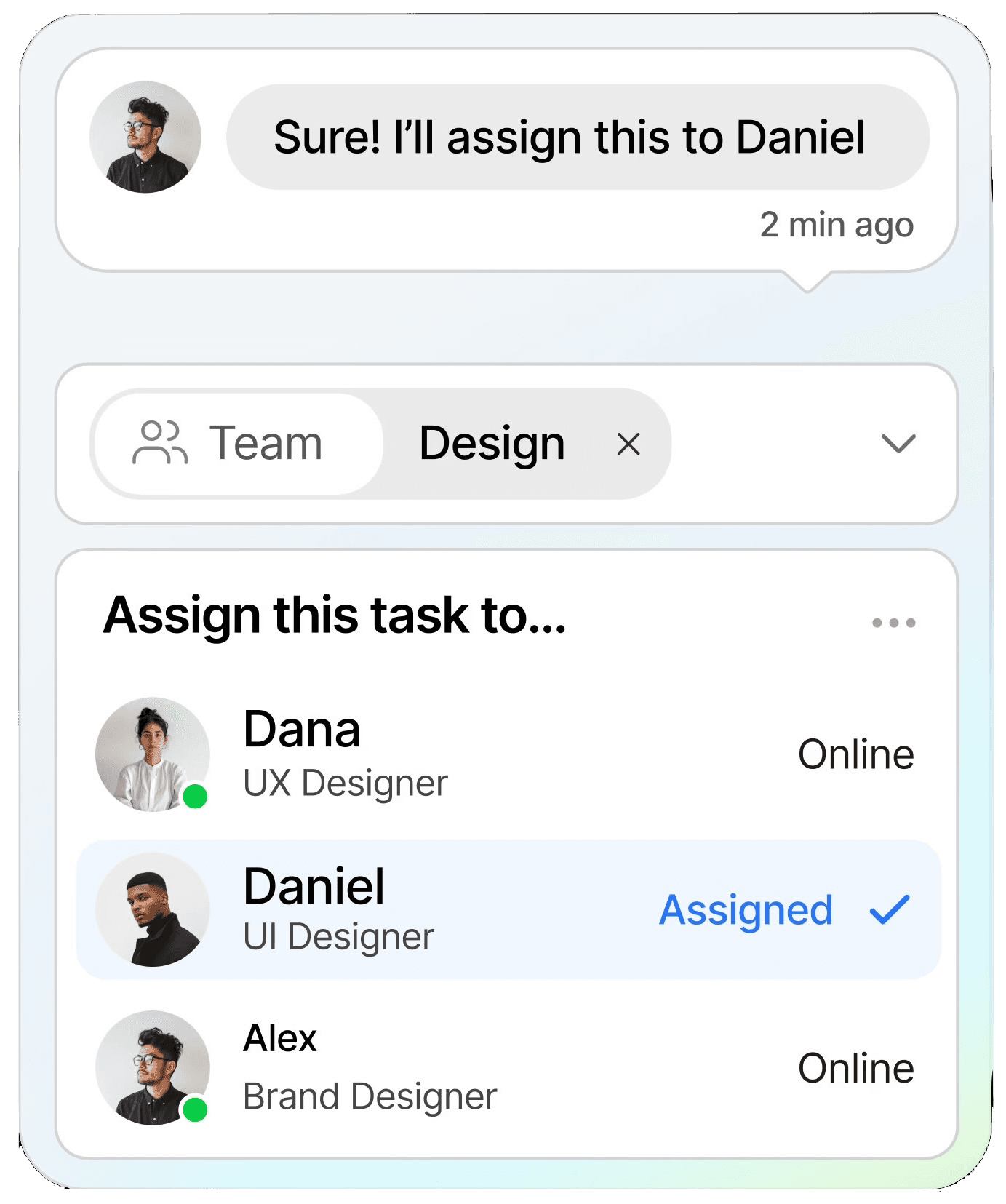
All incoming replies land in ChatDaddy's shared team inbox, where editors and community managers can respond, tag, and manage reader conversations without switching platforms.
Turn Your Audience Into a WhatsApp Subscriber List
Join 23,500+ businesses using ChatDaddy. Start free — no credit card required. Meta ISV Partner with 20x broadcast reach and unlimited contacts.
Start Free Today
Use Cases by Media Type
WhatsApp CRM is used across the media industry by news publishers for breaking alerts and daily briefings, magazines for exclusive subscriber content, podcast networks for episode notifications and listener engagement, influencers for community management, and content creators for paid content delivery and audience monetization.
News Publishers and Digital News Outlets
For digital news publishers, WhatsApp solves three existential problems simultaneously: declining email open rates, social media algorithm dependency, and audience commoditisation. A structured WhatsApp CRM strategy lets publishers:
- Send a 7 AM morning briefing to 95%+ of subscribers who will actually read it
- Push breaking news alerts within minutes of a story breaking, segmented by reader interest
- Build a direct paid subscriber funnel that converts free WhatsApp subscribers into paying members
- Reduce dependency on Facebook, Google News, and Apple News as distribution intermediaries
One regional news outlet with 80,000 WhatsApp subscribers reported that WhatsApp now drives 38% of all article pageviews — more than Facebook and email combined — after 12 months of consistent WhatsApp CRM strategy.
Digital Magazines and Lifestyle Publications
Magazines use WhatsApp to extend the editorial experience beyond the publication itself. Lifestyle magazines send exclusive behind-the-scenes content, early access to features, and subscriber-only offers directly to readers' phones. The result is stronger brand loyalty and higher renewal rates.
Key tactics for magazines:
- Weekly curated digests — a Sunday afternoon roundup of the week's best stories with rich images and links
- Exclusive subscriber drops — notify print or digital subscribers of online-exclusive content before it goes public
- Advertiser integrations — sponsored WhatsApp content delivers higher CPMs than banner ads because of the engagement differential
- Event invitations — exclusive events for premium subscribers with RSVP collection via WhatsApp
Podcast Networks and Audio Content
Podcast discovery remains a significant challenge in the industry — most listeners stick to shows they already know. WhatsApp CRM changes this by giving podcast networks a direct notification channel that competes with push notifications from podcast apps:
- New episode alerts — "Episode 147 is live. [Podcast Name]: [Episode Title] — Tap to listen" with a direct link
- Show trailers and clips — send a 60-second audio clip teaser directly in WhatsApp to drive listens
- Listener Q&A submissions — "Submit your question for this week's guest episode. Reply now."
- Sponsor activation — include sponsor messages in episode notification broadcasts with tracked links

Influencers and Personal Brands
The creator economy has a platform dependency problem: Instagram, YouTube, and TikTok audiences can be erased by a single algorithm change or account suspension. WhatsApp CRM gives influencers an owned, algorithm-free audience that is genuinely theirs:
- VIP community access — offer WhatsApp subscribers exclusive content, early access, and direct interaction as a premium perk
- Product launch notifications — new merch drops, course launches, and affiliate campaigns sent directly to engaged fans
- Personal interaction at scale — use automation to give the feel of a personal conversation ("Hey [Name], I wanted to share something with you first...") while managing thousands of subscribers
- Paid community tiers — segment free and paid subscribers, delivering different content levels based on subscription status
Content Creators and Independent Publishers
Solo writers, newsletter operators, Substack-style publishers, and independent journalists are finding WhatsApp to be a powerful complement to their existing distribution. Unlike Substack or Beehiiv, WhatsApp puts your content inside the app your audience lives in — not another inbox they have to remember to open.
For independent creators, the key advantage is the personal feel at minimal cost. ChatDaddy's free plan lets you start with 1 teammate and a functioning shared inbox. Paid plans from $119/month give you the broadcast infrastructure to serve subscriber lists of any size — all with unlimited contact storage.
How ChatDaddy Powers Media Operations
ChatDaddy is a Meta ISV Partner (not a BSP) offering media businesses unlimited contacts, a no-code chatbot builder, scheduled broadcasts, shared editorial inbox, API access, Zapier and CMS integrations, 0% markup on WhatsApp API fees, and coexistence mode — letting your team use the API and the standard WhatsApp Business App on the same number simultaneously.
ChatDaddy is built on a fundamental principle that matters enormously to growing media businesses: zero per-contact fees and unlimited contacts on all paid plans. Most CRM platforms charge per subscriber above a threshold — the bigger your audience grows, the more you pay. ChatDaddy's model scales with you without penalising growth.
Coexistence Mode: API + WhatsApp Business App on One Number
One of ChatDaddy's unique technical capabilities is coexistence — the ability to run the WhatsApp Business API (which powers all broadcasting and automation) alongside the standard WhatsApp Business App on the same phone number simultaneously. For media teams, this means:
- Your editorial team manages the API-powered shared inbox in ChatDaddy's dashboard
- Individual journalists can still use the WhatsApp Business App on their phones for source conversations
- No disruption to existing workflows while you scale up the CRM capability
No-Code Automation for Editorial Teams
Your editorial team shouldn't need a developer to set up WhatsApp automation. ChatDaddy's visual no-code flow builder lets non-technical staff create:
- Subscriber onboarding sequences triggered by a QR scan or link click
- Topic preference selection flows ("Reply 1 for Politics, 2 for Business, 3 for Sports...")
- Automated subscription renewal reminders at 30, 14, and 7 days before expiry
- Content delivery automation triggered by your publishing schedule
API Access and CMS Integration
For larger media operations with development resources, ChatDaddy provides full API access to integrate directly with your:
- Content Management System (WordPress, Ghost, custom CMS) — new article published triggers WhatsApp notification to relevant subscriber segment
- Subscription management platform — sync subscriber status changes in real time
- Analytics stack — track WhatsApp engagement data alongside your other audience metrics
- Zapier — connect 5,000+ apps without custom development
0% API Markup
Unlike some platforms that markup WhatsApp's per-conversation API pricing, ChatDaddy charges 0% markup on all WhatsApp API fees. You pay exactly what Meta charges for conversations — no hidden margin on top. For media businesses sending millions of messages annually, this translates to meaningful cost savings.
Content Monetization via WhatsApp
Media businesses monetize WhatsApp audiences through paid subscriber tiers, sponsored broadcast content, exclusive content access, affiliate campaigns, event ticket sales, merchandise drops, and premium Q&A access — all delivered through segmented WhatsApp broadcasts to opted-in subscriber lists.
WhatsApp isn't just a distribution channel — it's a monetization infrastructure. The engagement rates that dwarf email and social media translate directly into revenue when deployed thoughtfully:
Paid Subscriber Tiers
Segment your WhatsApp list into free and paid tiers. Free subscribers receive daily headlines and one featured article. Paid subscribers get the full newsletter, exclusive analysis, early access, and direct Q&A opportunities. When a free subscriber clicks a "paid subscribers only" link, they're prompted with a one-tap upgrade flow that takes them to your payment page — frictionless conversion at the point of maximum interest.
Sponsored Newsletter Content
WhatsApp broadcast sponsorships command significantly higher CPMs than email or social because the engagement is real and measurable. A sponsor placement in a WhatsApp newsletter with a 95% open rate is categorically more valuable than an email with 20% opens. ChatDaddy's tracked links give you click data to prove ROI to advertisers.
Affiliate and Commerce Integration
Every link sent in a WhatsApp broadcast can be tracked. Embed affiliate links in product recommendations, book reviews, or curated shopping content. The combination of high open rates, a trusted media brand, and a personal channel creates conversion rates that out-perform every other affiliate distribution channel most publishers use.
Event Ticketing and Experience Sales
Live events — panels, screenings, podcast recordings, subscriber dinners — are among the highest-margin revenue streams for media businesses. WhatsApp is the ideal channel for driving ticket sales: RSVP collection, waitlist management, reminder sequences, and post-event follow-up all happen within a single automated flow.
Build Your Media Brand's Direct Audience on WhatsApp
Unlimited contacts. 20x broadcast reach. 0% API markup. ChatDaddy powers the WhatsApp strategy of 23,500+ businesses globally — including publishers, creators, and media brands. Start free today.
Get Started Free
Privacy, Consent & Compliance for Publishers
Media businesses using WhatsApp for audience communication must collect explicit opt-in consent before sending broadcast messages, provide clear opt-out mechanisms in every communication, comply with GDPR (EU), PDPA (Malaysia/Thailand/Singapore), LGPD (Brazil), and other applicable data protection laws, and only send content types that subscribers consented to receive.
Unlike email newsletters, where recipients are used to a level of unsolicited contact, WhatsApp operates on a stricter consent model — and that's a feature, not a limitation. Your WhatsApp subscriber list is, by definition, a list of people who actively chose to hear from you. This produces dramatically better engagement and a legally cleaner audience than purchased email lists.
The Opt-In Requirement
The WhatsApp Business API requires explicit opt-in before any business can send a message to a user. This means you cannot import an email subscriber list and start messaging them on WhatsApp without their specific consent to receive WhatsApp communications. The right approach:
- QR codes on print publications, event signage, and website pages with a clear "Subscribe to our WhatsApp newsletter" label
- Click-to-WhatsApp links on your website and social profiles with a pre-filled opt-in message
- Email campaigns inviting existing subscribers to also join your WhatsApp channel
- In-article opt-in prompts: "Get this story in WhatsApp — scan the code below"
Opt-Out Management
Every broadcast must include an easy opt-out mechanism. ChatDaddy automates this: when a subscriber replies with "STOP", "Unsubscribe", or similar keywords, they are automatically removed from all broadcast lists. This is handled at the platform level — no manual management required.
Data Protection by Jurisdiction
Media businesses with international audiences must navigate multiple data protection frameworks:
- GDPR (European Union) — requires lawful basis for processing, data subject rights, and data breach notification. Using the official WhatsApp Business API through a certified partner provides audit trails and data access controls.
- PDPA (Malaysia, Thailand) — requires consent for marketing communications, right to erasure, and data access on request.
- LGPD (Brazil) — Brazil's equivalent of GDPR, requiring consent and data subject rights for all marketing communications.
- CAN-SPAM / CCPA (United States) — while primarily covering email, US-based publishers should ensure opt-out mechanisms and data transparency apply to WhatsApp lists as well.
ChatDaddy, as a Meta ISV Partner (not a BSP), operates under Meta's official API programme with the security and compliance infrastructure that entails: end-to-end encryption, secure data handling, and the ability to export or delete subscriber data on request. For more information, see Meta's WhatsApp Business privacy documentation.
Pricing Plans
ChatDaddy pricing for media businesses: Free at $0 (1 teammate), Basic at $119/month (5 teammates), Pro at $299/month (10 teammates), Max at $799/month (15 teammates). All paid plans include unlimited contacts, broadcast messaging, no-code chatbot builder, and 0% markup on WhatsApp API fees. Media businesses on Pro and Max get AI chatbot and full API access.
ChatDaddy's pricing is designed around teammates, not contacts — meaning your subscriber list can grow without your platform costs scaling proportionally. Here's the full breakdown:
| Plan |
Price (USD/month) |
Teammates |
Key Features for Media |
| Free | $0 | 1 | Shared inbox, basic automation, limited broadcasts |
| Basic | $119 | 5 | Full broadcast tool, chatbot builder, unlimited contacts, scheduled sends |
| Pro | $299 | 10 | AI chatbot, full API access, advanced segmentation, Zapier integration, analytics |
| Max | $799 | 15 | Priority support, custom integrations, dedicated account manager, unlimited everything |
For most independent publishers and creator businesses, the Basic plan at $119/month provides everything needed to distribute newsletters, send breaking news alerts, and manage subscriber segments for unlimited contacts. Growing media teams with multiple editorial staff will find the Pro plan at $299/month more appropriate, with its full API access for CMS integration and AI-powered chatbot for subscriber onboarding automation.
Compare this to email marketing equivalents: Mailchimp charges $299/month for 50,000 contacts — and delivers 20% open rates. ChatDaddy at $119/month handles unlimited contacts and delivers 95%+ open rates. The economics are not close.
"For our subscriber newsletter operation, WhatsApp via ChatDaddy costs a fraction of what we were paying for email — and our open rates are five times higher. The ROI on sponsored content in the WhatsApp channel alone covers the platform cost three times over." — Independent media founder, Southeast Asia
Getting Started: Setup for Media Businesses
To set up WhatsApp CRM for a media business: sign up at app.chatdaddy.tech, complete Meta Business verification with your registered company details, connect your dedicated WhatsApp number, configure subscriber opt-in flows, set up content segmentation tags, build your first broadcast template, and integrate with your CMS or publishing tools via API or Zapier.
The complete setup process for a media business typically takes under an hour for the technical steps, with Meta Business verification completing within 1-3 business days:
- Sign up at app.chatdaddy.tech — free plan available with no credit card required. Explore the interface before committing.
- Complete Meta Business verification — you'll need your registered business name, business website, phone number, and company registration documents. ChatDaddy guides you through this as a Meta ISV Partner.
- Connect a dedicated WhatsApp number — use a number dedicated to your publication's WhatsApp presence. This becomes your subscriber-facing channel identity.
- Configure subscriber opt-in flow — build the welcome automation that triggers when someone scans your QR code or clicks your WhatsApp subscribe link. Collect their name, topic preferences, and subscription tier in a conversational flow.
- Set up segmentation tags — create tags for each content vertical, subscriber tier, and engagement level. Apply these during the opt-in flow for immediate segmentation.
- Build your first broadcast template — create and submit a Meta-approved message template for your newsletter format. Templates are reviewed within 24-48 hours. ChatDaddy's team helps optimize templates for higher approval rates.
- Integrate with your publishing stack — connect your CMS, subscription management tool, and analytics via API or Zapier to automate content delivery triggers.
- Invite your editorial team — add writers, editors, community managers, and commercial staff with appropriate role-based permissions. The shared inbox routes all subscriber replies to the right team member.
- Launch and promote your WhatsApp channel — add a WhatsApp subscribe QR code to your website, existing email newsletter, social profiles, and any print publications.
Frequently Asked Questions
What is WhatsApp CRM for media and publishing?
WhatsApp CRM for media and publishing is a platform built on the WhatsApp Business API that allows news publishers, magazines, podcast networks, influencers, and content creators to distribute content directly to subscribers via WhatsApp. It provides broadcast messaging, subscriber segmentation, automation flows, two-way engagement tools, and team inbox management — replacing or supplementing email newsletters with a channel that delivers 95-98% open rates.
How do media businesses grow their WhatsApp subscriber list?
Media businesses grow WhatsApp subscriber lists through QR codes on their website, articles, social media profiles, and print publications; Click-to-WhatsApp links in existing email newsletters; in-article subscription prompts; social media posts; and at live events. Because WhatsApp requires explicit opt-in, the resulting subscriber list is high-quality — people who actively chose to receive your content, producing significantly better engagement than passively accumulated email lists.
Is ChatDaddy a Meta BSP or ISV — and what's the difference for media?
ChatDaddy is a Meta ISV Partner (Independent Software Vendor), not a BSP (Business Solution Provider). The practical difference for media businesses: ChatDaddy charges 0% markup on WhatsApp API fees — you pay exactly what Meta charges for conversations, with no additional margin on top. This is particularly important for high-volume publishers sending millions of messages annually. BSPs often markup API fees, which adds significant cost at scale.
How many subscribers can I send WhatsApp broadcasts to with ChatDaddy?
ChatDaddy's paid plans include unlimited contacts with no per-contact pricing, meaning your subscriber list can grow without your platform costs increasing proportionally. The broadcast infrastructure delivers with 20x reach at scale. WhatsApp's own API has per-conversation pricing (charged by Meta, not ChatDaddy), but the platform itself places no cap on your subscriber list size. Most media businesses find that ChatDaddy's Basic plan at $119/month handles their full subscriber base from day one.
Can I send images, videos, and PDFs in WhatsApp newsletters?
Yes. WhatsApp supports rich media messages including images (JPEG, PNG), videos (MP4), audio clips (MP3, OGG), PDFs, and formatted text with bold and italic styling. Media businesses regularly send article hero images with text previews, podcast episode art with audio clips, magazine cover images, and PDF editions directly through WhatsApp broadcasts. Rich media messages consistently produce higher engagement than text-only broadcasts.
How does WhatsApp CRM comply with GDPR and data protection laws for media?
WhatsApp CRM compliance for media businesses rests on three pillars: explicit opt-in before any contact (required by the WhatsApp Business API itself), easy opt-out available in every communication, and secure data storage with access controls. ChatDaddy, operating on Meta's official API infrastructure, provides end-to-end encryption, data export capabilities for subject access requests, and deletion tools for right-to-erasure compliance. Media businesses targeting EU audiences should also document their lawful basis for processing subscriber data under GDPR Article 6 — legitimate interest or consent both apply in most newsletter contexts.
Can I monetize my WhatsApp subscriber list through sponsored content?
Yes. Sponsored content in WhatsApp broadcasts is one of the most effective forms of media monetization because the engagement rates (95%+ opens, 35-45% click-through) are dramatically higher than email or social. Brands pay premium CPMs for genuine reader engagement. ChatDaddy's tracked links give you click data to prove ROI. Many media businesses using ChatDaddy report that a single sponsored WhatsApp broadcast generates more advertiser value than a full week of social media or email campaigns.
How does ChatDaddy's coexistence feature work for editorial teams?
Coexistence means your media business can run the WhatsApp Business API (powering all broadcasting, automation, and the shared inbox) and the standard WhatsApp Business App on the same phone number simultaneously. This means individual journalists can still use WhatsApp on their phones for source management and personal communications, while the editorial team manages subscriber broadcasts and incoming reader messages through ChatDaddy's web dashboard — all on the same published number, with no workflow disruption.
ChatDaddy Team
ChatDaddy is a Meta ISV Partner serving 23,500+ businesses across 50+ countries, including news publishers, digital magazines, podcast networks, influencers, and content creators. Our platform helps media businesses build direct, owned WhatsApp audiences that no algorithm can take away.
chatdaddy.tech