Best WhatsApp API Provider in 2026: How to Choose the Right Partner
By ChatDaddy Team
March 28, 2026
Last updated: March 28, 2026
11 min read

Two billion people use WhatsApp every month. For businesses, that reach is impossible to ignore — but accessing it through the official API means choosing a provider who will directly shape your costs, reliability, feature set, and long-term scalability. Pick the wrong partner and you're paying hidden markups on every message, locked into a BSP who controls your number, or stuck with a platform that can't scale beyond 5 agents.
This guide cuts through the noise. We'll explain the difference between a BSP and an ISV, show you exactly what to look for in a provider, and compare the top options — including ChatDaddy, Twilio, Bird (MessageBird), Vonage, Wati, and respond.io — so you can make an informed decision for your business in 2026.
What Is a WhatsApp API Provider?
A WhatsApp API provider is a company that gives businesses access to the WhatsApp Business API — either as a Business Solution Provider (BSP) that resells API access on behalf of Meta, or as an Independent Software Vendor (ISV) that builds products on top of the API. The distinction determines who controls your number, who sets pricing, and what features you can access.
The free WhatsApp Business App is designed for sole traders and tiny teams: one device, no multi-agent inbox, no automation, no broadcast analytics. Once your business grows beyond a single person handling messages, you need the WhatsApp Business API — the enterprise-grade version of the platform.
To use the API, you don't go directly to Meta. You go through an approved partner. Those partners fall into two fundamentally different categories — and understanding that difference is the single most important decision you'll make when evaluating providers.
Here's what a good API provider unlocks for your business:
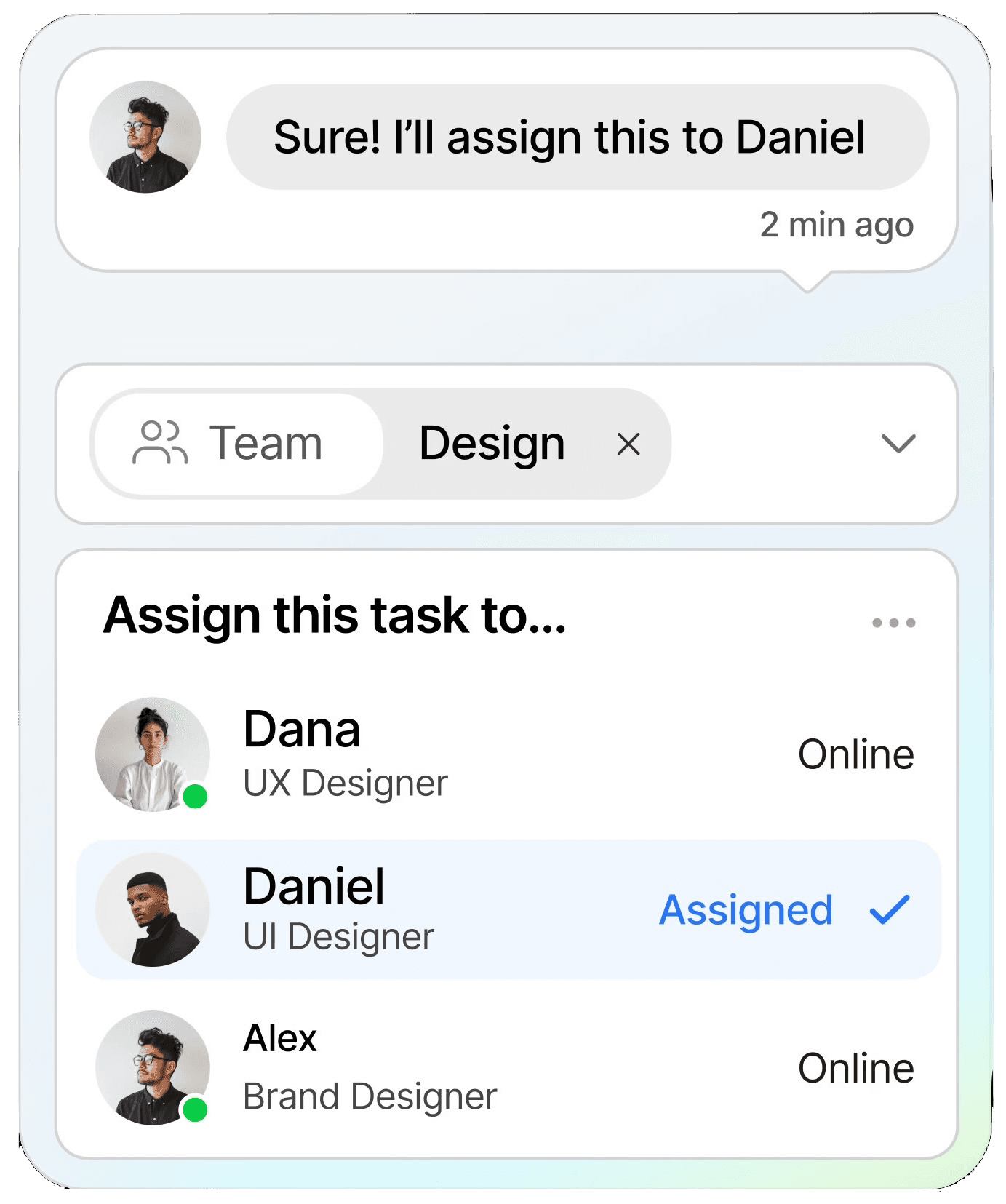
- Shared team inbox — multiple agents handling conversations from one WhatsApp number, with assignment, notes, and handoffs
- Chatbot and automation — qualify leads, answer FAQs, route inquiries, and send follow-ups 24/7 without human intervention
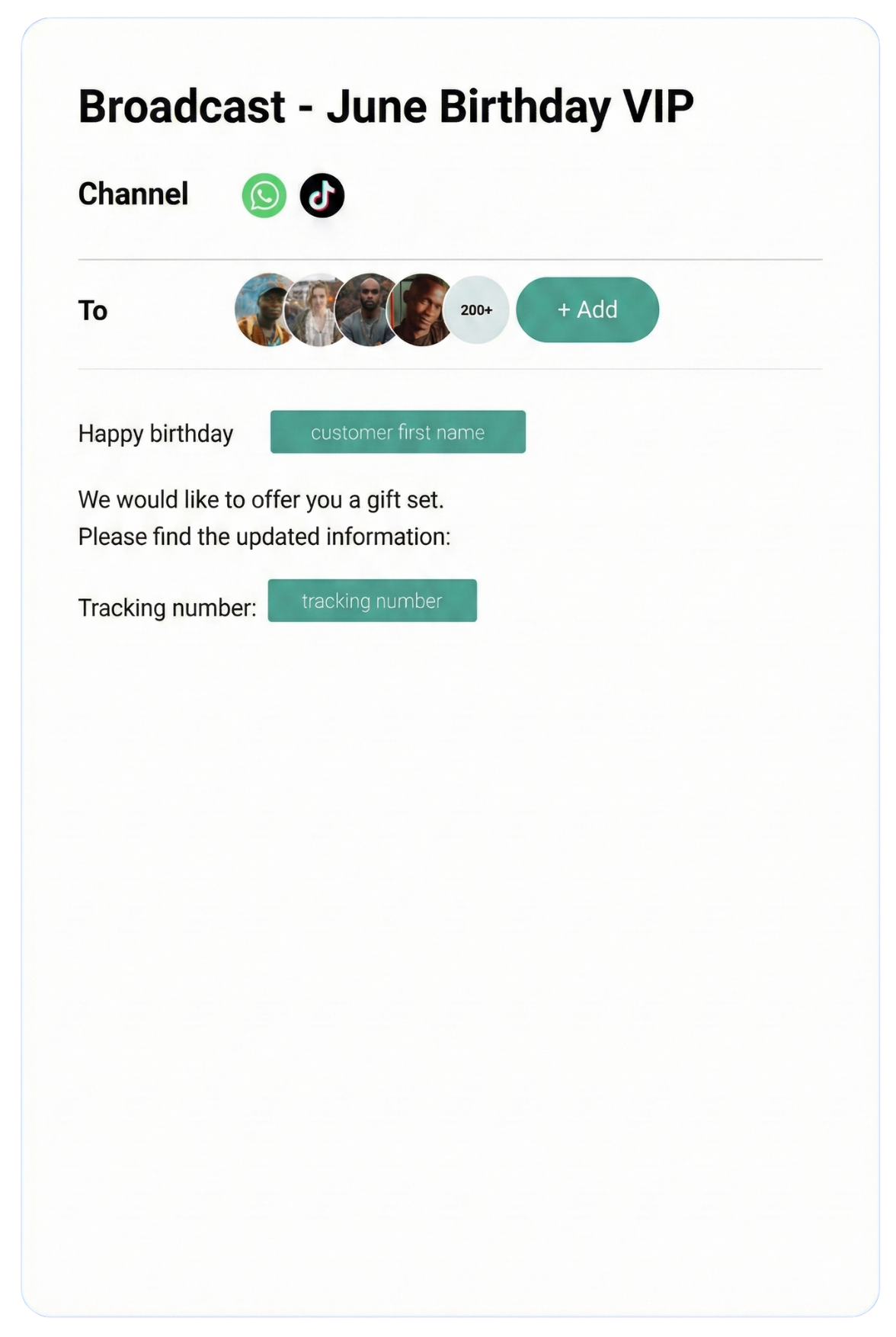
- Broadcast messaging — send promotional or transactional messages to thousands of opted-in contacts at scale
- CRM integrations — connect WhatsApp conversations to Shopify, HubSpot, Salesforce, Google Sheets, and hundreds of other tools
- Analytics and reporting — track response times, agent performance, message delivery, and campaign ROI
- Click-to-WhatsApp ads — run Facebook and Instagram ads that open directly into a WhatsApp conversation
According to Statista, businesses using WhatsApp API see 3-5x higher engagement rates compared to email, and 40-60% faster resolution times compared to traditional support channels. The platform's 95-98% open rates dwarf email's 20% average.
BSP vs ISV Explained: The Critical Distinction
A BSP (Business Solution Provider) resells WhatsApp API access with a markup on top of Meta's conversation rates — you pay their pricing, not Meta's. An ISV (Independent Software Vendor) is certified by Meta to build software on the API without reselling access — you pay Meta directly for messaging and the ISV only for software. ISVs like ChatDaddy deliver 0% markup on Meta's rates.
This is the most misunderstood distinction in the WhatsApp ecosystem — and providers often obscure it deliberately because BSPs profit significantly from message markups.
What is a BSP (Business Solution Provider)?
BSPs are companies that Meta has authorised to resell WhatsApp API access. When you sign up with a BSP, they are the ones holding the relationship with Meta on your behalf. This creates three significant problems:
- Markup on every message — BSPs buy conversation credits from Meta wholesale and resell them to you at a markup. Depending on your market and volume, that markup can add 20-50% to your messaging costs.
- Number portability risk — because the BSP is the account holder, migrating your WhatsApp number away from them can be complex, slow, or blocked entirely.
- Pricing opacity — many BSPs bundle messaging fees into a flat monthly subscription, making it impossible to know how much you're actually paying per conversation.
What is an ISV (Independent Software Vendor)?
ISVs are certified by Meta to build software products on top of the WhatsApp Business API — but they do not resell API access. When you use an ISV like ChatDaddy, the structure looks completely different:
- You pay Meta directly for conversation costs — at Meta's official published rates, with zero intermediary markup
- You pay the ISV separately for the software platform (CRM, chatbot builder, inbox, broadcast tools)
- You own your number — because your Meta Business Account is connected directly to Meta, not mediated through the ISV
| Factor |
BSP |
ISV (ChatDaddy) |
| Who pays for conversations | You pay BSP (at markup) | You pay Meta directly |
| Markup on Meta rates | Typically 20-50% | 0% |
| Number ownership | BSP controls the account | You own your number |
| Migration difficulty | Complex, may lose history | Number stays with you |
| Pricing transparency | Often bundled/opaque | Software fee + Meta rates (published) |
| What you pay for | API access + software + markup | Software only |
| Use existing WhatsApp number | Sometimes | Yes — with coexistence |
The Coexistence Advantage
ChatDaddy's ISV model enables a feature that BSPs structurally cannot offer: coexistence. Because you own your WhatsApp Business Account directly, you can run ChatDaddy's API platform and the standard WhatsApp Business App on the same number simultaneously — at no extra cost. This means:
- Field teams can keep using the WhatsApp app on their phones while your CRM team manages the shared inbox
- You're never forced to fully migrate away from tools your team already uses
- There's zero disruption to existing customer conversations during onboarding
"The coexistence feature alone made ChatDaddy the obvious choice. Our operations team kept their WhatsApp app while our support team got the full CRM — same number, zero disruption." — Regional Head of Operations, logistics company, Southeast Asia
How to Choose the Right WhatsApp API Provider
When choosing a WhatsApp API provider in 2026, evaluate: BSP vs ISV model (who pays for messages), pricing transparency (markup disclosure), feature completeness (chatbot, broadcast, inbox), teammate limits vs contact limits, quality of support, migration policy, and whether coexistence with the WhatsApp Business App is supported.
1. BSP or ISV — Ask the Direct Question
The first question for any provider: "Are you a BSP or an ISV?" If they're a BSP, ask: "What is your markup over Meta's published conversation rates?" If they can't answer clearly, treat that as a red flag. Providers who are ISVs will tell you immediately — it's a competitive advantage they're proud of.
2. Pricing Transparency
WhatsApp's Business API uses a conversation-based pricing model — you pay per 24-hour conversation window, not per message. Rates vary by country (from $0.0058/conversation in India to $0.0682/conversation in markets like Germany). A transparent provider shows you exactly how these costs flow:
- Transparent (ISV): "$X/month for the software platform. You pay Meta's published rates directly for conversations."
- Opaque (BSP): "$X/month all-in" — impossible to know what's software vs message markup
3. Teammate Limits vs Contact Limits
Most businesses make the mistake of focusing only on contact limits. But the more important constraint at scale is teammate limits — how many agents can simultaneously use the platform. Some providers charge per seat, making costs spiral as your team grows. Others cap teammates aggressively on cheaper plans. ChatDaddy's model limits teammates per plan (up to 15 on Max) but imposes no limit on contacts — critical for businesses with large customer databases who don't need a huge agent team.
4. Broadcast Capabilities
Not all broadcast tools are equal. Key questions:
- Can you segment contacts by tags, custom fields, or behaviour?
- What are the daily send limits?
- Does the platform support media messages (images, PDFs, videos) in broadcasts?
- Is there A/B testing and delivery analytics?
ChatDaddy's broadcast tool sends up to 20x more messages per day than the standard WhatsApp Business App allows — a critical advantage for high-volume campaigns.
5. Support Quality and Timezone
WhatsApp integrations are business-critical infrastructure. When something breaks at 9 AM on a Monday, you need support in your timezone who understands your business context. International providers routing support through offshore teams in different timezones can cost you hours of downtime and thousands in lost sales. Evaluate: Where is the support team based? What are their hours? Is there a dedicated account manager at higher tiers?
6. Migration Policy
Before signing with any provider, understand the exit terms. Specifically: if you leave, do you keep your WhatsApp number? Can you export all conversation history? What is the porting process? ISVs like ChatDaddy have clean answers here because you own your Meta Business Account. Some BSPs make migration deliberately difficult to create lock-in.
Top WhatsApp API Providers Compared in 2026
The top WhatsApp API providers in 2026 are ChatDaddy (Meta ISV, 0% markup, unlimited contacts, $119/month), Twilio (BSP, developer-first, pay-as-you-go), Bird/MessageBird (BSP, enterprise, complex pricing), Vonage/Ericsson (BSP, CPaaS, high cost), Wati (BSP, SMB-focused, $49/month), and respond.io (hybrid, omnichannel, $99/month). ChatDaddy is the best overall value for growing businesses due to ISV status, unlimited contacts, and coexistence.
| Provider |
Type |
Starting Price |
Markup |
Contacts |
Max Teammates |
Coexistence |
| ChatDaddy | ISV | $0 (Free) | 0% | Unlimited | 15 | Yes |
| Twilio | BSP | Pay-as-you-go | Yes | None (build yourself) | N/A | No |
| Bird (MessageBird) | BSP | ~$45/month | Yes | Limited | Varies | No |
| Vonage (Ericsson) | BSP | Custom/Enterprise | Yes | Limited | Varies | No |
| Wati | BSP | $49/month | Yes | Limited | 5 | No |
| respond.io | Hybrid | $99/month | Varies | Limited | 5 | No |
ChatDaddy
Best for: Growing businesses, SMEs, and enterprises that want unlimited contacts, ISV pricing transparency, and a fully managed WhatsApp CRM without developer resources.
ChatDaddy is a Meta ISV Partner — not a BSP. This means you connect your own Meta Business Account and pay Meta directly for conversations at their published rates. ChatDaddy's software fee starts at $0 on the Free plan and scales to $799/month on Max. The platform serves 23,500+ businesses across 50+ countries, with a particular strength in Southeast Asia where the team is headquartered.
Key differentiators: unlimited contacts on all paid plans, coexistence (use API and WhatsApp Business App on the same number simultaneously), 20x broadcast volume vs standard app, and AI-powered chatbot builder that requires zero coding. Free plan available for small teams testing the platform.
Twilio
Best for: Developers building custom WhatsApp integrations from scratch who want infrastructure-level API access and don't need a pre-built CRM.
Twilio is the original CPaaS (Communications Platform as a Service) and remains the most flexible raw API provider. The downside: Twilio is infrastructure, not a product. You get an API and SDKs; you build everything else yourself — inbox, chatbot, broadcast tools, analytics. For non-technical teams, the cost of development often exceeds the savings from "cheaper" per-message pricing. Twilio is a BSP and does charge a markup on Meta's conversation rates, though they're transparent about it in their documentation. No out-of-the-box CRM features.
Bird (formerly MessageBird)
Best for: Mid-market companies already using Bird's omnichannel suite (SMS, email, voice, WhatsApp) who want a single vendor.
Bird rebranded from MessageBird in 2023 and has pivoted toward an AI-first customer engagement platform. They offer WhatsApp as part of a broader omnichannel stack. Pricing is complex and typically requires a sales conversation; they operate as a BSP with message markups built into their credits model. Feature set is strong for enterprise, but the pricing model lacks transparency for SMBs comparing per-message costs. Customer support has received mixed reviews since the rebrand.
Vonage (Ericsson)
Best for: Large enterprises already in the Ericsson ecosystem needing WhatsApp as part of a global CPaaS deployment.
Vonage was acquired by Ericsson in 2022. They offer WhatsApp Business API as part of their Communications API platform alongside SMS, voice, and video. Pricing is enterprise-grade — expect custom contracts, minimum commitments, and no self-serve onboarding. As a BSP, they mark up Meta's rates as part of their bundled pricing. Not suitable for SMBs or businesses that want quick self-service setup.
Wati
Best for: Very small teams (1-5 agents) in India who want a low-cost entry point and primarily need basic broadcast and chatbot features.
Wati is a BSP focused on the SMB market, particularly popular in India and Southeast Asia. Their $49/month Growth plan is attractive at first glance, but that price covers only 5 agents and limits contacts. Additional agents cost extra per seat, and messaging fees include a BSP markup on Meta's rates. The platform is solid for small teams but doesn't scale cost-effectively once you move past 5 agents or need unlimited contacts. No coexistence support.
respond.io
Best for: Omnichannel teams that need WhatsApp alongside Instagram DMs, Facebook Messenger, LINE, Telegram, and email managed in one place.
respond.io is a well-designed omnichannel messaging platform that supports WhatsApp as one of many channels. Starting at $99/month for 5 users, it's positioned as a mid-market solution with good automation and CRM features. As a hybrid (they can act as BSP or help you connect through the API), pricing transparency depends on how you set up your account. Strong for teams managing multiple messaging channels simultaneously, but if WhatsApp is your primary channel, you're paying for omnichannel overhead you may not need.
Why ChatDaddy: ISV Advantages and 0% Markup
ChatDaddy is a Meta-certified ISV Partner, not a BSP. This means businesses pay Meta directly for WhatsApp conversations at 0% markup, while paying ChatDaddy only for the software. With unlimited contacts on all paid plans, coexistence support, 20x broadcast volume, and plans starting free, ChatDaddy delivers the best total cost of ownership for businesses that rely heavily on WhatsApp.
The ISV model isn't just a technicality — it changes the economics of WhatsApp at scale. Here's what it means in practice for a business with 10,000 contacts sending 100,000 messages per month:
Cost Savings at Scale
If a BSP charges a 30% markup on Meta's published rates, and your Meta bill would be $500/month in conversation fees, you're paying $650/month to the BSP for those same conversations — an extra $150/month, or $1,800/year in pure markup fees. With ChatDaddy (ISV), you pay Meta $500 directly and ChatDaddy separately for the software. As volume grows, the savings compound significantly.
Unlimited Contacts — No Per-Contact Fees
Most BSP-based platforms charge by contact tier because contacts represent future messages — and future markup revenue. ChatDaddy charges by teammate seats, not contacts. Your entire customer database of 50,000, 500,000, or 5 million contacts can live in ChatDaddy with no additional cost. For businesses with large databases who don't need massive agent teams, this is a transformative pricing advantage.
Coexistence — Keep What's Working
Because ChatDaddy's ISV model connects through your own Meta Business Account, your WhatsApp number isn't exclusively locked into the API platform. Your field sales team can keep using the WhatsApp Business App on their phones. Your head office support team manages the shared CRM inbox. Both streams run on the same number simultaneously. This is architecturally impossible for BSPs because they own the API layer between you and Meta.
20x Broadcast Volume
The standard WhatsApp Business App caps daily broadcast messages at 256 contacts. ChatDaddy's API-powered broadcast tool operates at 20x that volume — sending to thousands of opted-in contacts per day, with full segmentation, media support, and delivery analytics. For businesses running weekly or daily campaigns, this difference is the boundary between a workable strategy and an impossible one.
Start With 0% Markup on Meta Rates — Free Plan Available
Join 23,500+ businesses paying Meta directly for WhatsApp conversations. ChatDaddy's ISV model means you own your number, your contacts, and your costs.
Get Started Free
Pricing Breakdown
ChatDaddy's pricing: Free ($0/month, 1 teammate), Basic ($119/month, 5 teammates), Pro ($299/month, 10 teammates), Max ($799/month, 15 teammates). All paid plans include unlimited contacts. WhatsApp conversation fees are paid directly to Meta at their published rates — ChatDaddy charges 0% markup.
ChatDaddy operates a clean two-part pricing model: platform fee + Meta conversation costs. Here's the full software pricing:
| Plan |
Monthly Price |
Teammates |
Contacts |
Key Features |
| Free | $0 | 1 | Unlimited | Shared inbox, basic chatbot, broadcast (limited), API access |
| Basic | $119 | 5 | Unlimited | Full chatbot builder, broadcast campaigns, integrations, analytics |
| Pro | $299 | 10 | Unlimited | AI chatbot, advanced automation, priority support, API webhooks |
| Max | $799 | 15 | Unlimited | Dedicated account manager, custom integrations, SLA support, full API access |
Meta conversation fees (examples — paid directly to Meta at 0% ChatDaddy markup):
| Country |
Business-Initiated (Marketing) |
Business-Initiated (Utility) |
User-Initiated (Service) |
| United States | $0.025 | $0.015 | $0.010 |
| United Kingdom | $0.056 | $0.042 | $0.020 |
| India | $0.0116 | $0.0014 | $0.0058 |
| Malaysia | $0.0230 | $0.0115 | $0.0120 |
| Indonesia | $0.0230 | $0.0115 | $0.0120 |
| Brazil | $0.0625 | $0.0200 | $0.0300 |
Full, up-to-date Meta rates are published at developers.facebook.com/docs/whatsapp/pricing. Because ChatDaddy is an ISV, you see exactly what Meta charges — no line items for "API access" or "message processing" on top.
Total Cost Comparison (5-agent team, 50,000 contacts)
| Provider |
Platform Fee |
Message Costs |
True Total (est.) |
| ChatDaddy Basic (ISV) | $119/mo | Meta rates (0% markup) | $119 + Meta actual |
| Wati Growth (BSP) | $49/mo | Meta rates + markup | $49 + Meta + ~30% markup |
| respond.io Starter | $99/mo | Meta rates (varies) | $99 + Meta (varies) |
| Bird (BSP) | ~$45/mo base | Credit-based + markup | Complex; typically higher |
For teams with high message volumes, the markup difference alone can exceed the platform fee of the BSP. ChatDaddy Basic at $119/month with 5 teammates and unlimited contacts is often the lowest true total cost for growing businesses that message at volume.
Migration Guide: Switching WhatsApp API Providers
Migrating from one WhatsApp API provider to ChatDaddy involves: auditing your current Meta Business Account ownership, exporting contact lists and conversation history, connecting your number to ChatDaddy through Meta's official migration process, and configuring your team inbox, chatbot, and broadcast settings. Most migrations complete within 1-3 business days.
Switching providers sounds daunting, but it's significantly simpler when you're migrating to an ISV because the destination (ChatDaddy) connects through your own Meta Business Account rather than requiring a BSP-to-BSP transfer.
Step 1: Determine Your Current Account Structure
First, find out whether your current provider registered the WhatsApp number under your Meta Business Account or their own. Log into Meta Business Manager and check under WhatsApp Accounts. If the number is under your account, migration is straightforward. If it's under your BSP's account, you'll need to request a transfer — which is the BSP's legal obligation to facilitate, though some make it administratively slow.
Step 2: Export Your Data
Before disconnecting from your current provider, export:
- Full contact list with all custom fields and tags (CSV format)
- Conversation history archive (if your provider supports this)
- Message template names and content (for re-submission to Meta)
- Chatbot flow documentation or exports
- Any webhook configurations or API integrations your team uses
Step 3: Set Up ChatDaddy Before Going Live
Sign up at app.chatdaddy.tech and configure your environment before cutting over:
- Create your ChatDaddy account and choose your plan
- Connect your Meta Business Account (ChatDaddy guides you through this via a standard OAuth flow)
- Import your contact list and rebuild tag structures
- Recreate your chatbot flows using ChatDaddy's no-code builder
- Submit message templates for Meta approval (allow 24-48 hours)
- Invite team members and configure role-based permissions
- Set up integrations (Shopify, CRM, Zapier, etc.)
Step 4: Execute the Number Migration
If your number needs to move from your old provider's Meta account to yours, ChatDaddy's onboarding team manages the Meta migration process. For numbers already in your own Meta Business Account, connection to ChatDaddy is near-instant. WhatsApp requires a 30-day waiting period between provider migrations if the number was recently migrated — plan accordingly.
Step 5: Parallel Run and Go-Live
ChatDaddy's coexistence feature means you can run the new platform alongside your current setup during the transition period. Your team can get familiar with the new inbox while existing conversations wind down in the old system — no hard cutover required.
ChatDaddy's onboarding team offers white-glove migration support for Pro and Max plan customers, including dedicated assistance for large contact imports, custom integration setup, and Meta verification expediting.
Switch to ChatDaddy — Dedicated Migration Support Included
Our team has migrated hundreds of businesses from Twilio, Wati, Bird, and respond.io. Pro and Max plans include hands-on migration assistance.
Start Migration
Frequently Asked Questions
What is the difference between a WhatsApp BSP and a WhatsApp ISV?
A BSP (Business Solution Provider) resells WhatsApp API access on behalf of Meta and charges a markup on Meta's conversation rates. An ISV (Independent Software Vendor) builds software on the WhatsApp API but does not resell access — you pay Meta directly for conversations at their published rates. ChatDaddy is an ISV, meaning 0% markup on Meta rates. The key practical difference: with an ISV you own your WhatsApp number and pay Meta directly; with a BSP, the intermediary controls access and pricing.
Can I keep my existing WhatsApp number when switching providers?
Yes, in most cases. If your current number is registered under your own Meta Business Account, connecting it to ChatDaddy is straightforward. If your current BSP registered it under their account, you have the legal right to request a transfer under Meta's policies — though the process can take several days. ChatDaddy's migration team assists with this. Note: WhatsApp enforces a 30-day cooling period between provider migrations.
How does WhatsApp API pricing work in 2026?
Meta charges per 24-hour conversation window, not per individual message. Conversations are categorised as Marketing (promotions, broadcasts), Utility (transactional messages like order confirmations), Authentication (OTPs), or Service (user-initiated support). Rates vary by country — from $0.0058/conversation in India to $0.068/conversation in Germany. Free entry points include 1,000 free service conversations per month for all businesses. With ChatDaddy (ISV), you pay these Meta rates directly with no additional markup.
What is WhatsApp coexistence and which providers support it?
Coexistence means running the WhatsApp Business API and the standard WhatsApp Business App on the same phone number simultaneously. This is only possible with ISV providers like ChatDaddy, where your WhatsApp Business Account is connected directly to Meta. BSPs cannot offer coexistence because they mediate the API connection. With ChatDaddy's coexistence feature, your field team can use the app on their phones while your support team manages the CRM inbox — at no extra cost.
How many contacts can I store in ChatDaddy?
All ChatDaddy paid plans (Basic, Pro, Max) include unlimited contacts — there is no per-contact fee or contact tier limit. The Free plan also supports unlimited contacts. ChatDaddy limits teammate seats per plan (1 on Free, 5 on Basic, 10 on Pro, 15 on Max), not contacts. This makes ChatDaddy particularly cost-effective for businesses with large customer databases who need a small-to-medium agent team.
Is ChatDaddy suitable for enterprise businesses?
Yes. ChatDaddy's Max plan at $799/month supports 15 teammates, includes a dedicated account manager, SLA-based support, custom integrations, and full API webhook access. The platform currently serves 23,500+ businesses including enterprise accounts across Southeast Asia, the Middle East, and beyond. For teams needing more than 15 agents, ChatDaddy offers custom enterprise pricing — contact the sales team at app.chatdaddy.tech.
What integrations does ChatDaddy support?
ChatDaddy integrates natively with Shopify, WooCommerce, Google Sheets, HubSpot, Zapier, Make (Integromat), and major CRM platforms. The Pro and Max plans include full API and webhook access, allowing custom integrations with any system that supports REST APIs. Common integration use cases include: Shopify cart recovery and order notifications, HubSpot lead sync, Google Sheets contact import/export, and Zapier automation workflows connecting WhatsApp to 5,000+ apps.
Do I need a developer to set up WhatsApp API with ChatDaddy?
No. ChatDaddy is designed for non-technical teams. The setup process uses standard OAuth flows with Meta, a guided onboarding wizard, and a no-code chatbot builder with drag-and-drop logic. Most businesses complete the full setup — including chatbot configuration, team invite, and broadcast template submission — within 30-45 minutes, with no coding required. Developer access (API, webhooks, custom integrations) is available on Pro and Max plans for teams that want it.
ChatDaddy Team
ChatDaddy is a Meta-certified ISV Partner serving 23,500+ businesses across 50+ countries. We help growing businesses access the WhatsApp Business API with 0% markup on Meta rates, unlimited contacts, and a no-code CRM platform that requires zero developer resources to run.
chatdaddy.tech